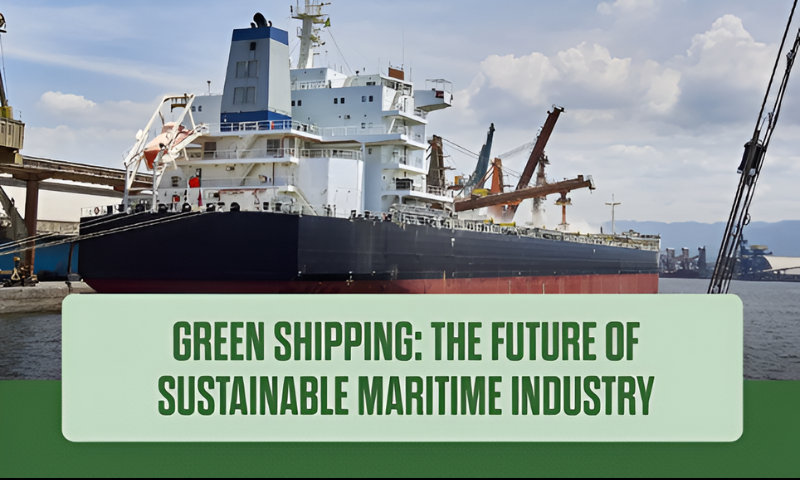
Green shipping: The future of sustainable maritime industry
 Sea and Beyond
12 Mar 2026
1126 view
0
0 Comment
This blog is published in collaboration with MLA College.
A decade ago, shipping emissions were discussed in sustainability reports. In 2026, they appear on balance sheets. International shipping accounts for roughly 2% of global CO₂ emissions. That share now has direct financial consequences. The European Union’s Emissions Trading System (EU ETS), a carbon pricing framework that requires companies to purchase allowances for every tonne of verified emissions, applies fully to maritime voyages within its scope from 1st January 2026. For many operators, carbon output now affects operating margins.
At the global level, the International Maritime Organisation (IMO) has committed member states to reach net-zero greenhouse gas emissions from international shipping by or around 2050. That commitment is already influencing fuel selection, engine design and fleet investment decisions.
For shipowners, ports and logistics operators, this creates operational pressure. For you, if you are considering a career in the sustainability industry or working within the maritime sector, it tells you where the skills demand is moving.
Where is the sustainability industry moving in 2026
In maritime, sustainability is moving from long-term targets to practical delivery. Regulation has set clear expectations and investment is accelerating the transition and the development of green careers. In 2026, the discussion is less about whether shipping should decarbonise and more about how quickly fleets, ports and fuel systems can adjust. You can see this in funding decisions, vessel orders and infrastructure upgrades already underway.
1. Governments are funding practical projects
In the UK, the UK Department for Transport continues to fund decarbonisation projects through the Clean Maritime Demonstration Competition. Recent funding rounds include:
- Hydrogen-powered vessel trials.
- Electric ferries on short sea routes.
- Shore power installations at ports.
- Smart energy management systems.
Several of these projects are active through 2025 and 2026. The focus is on testing technology in real operating conditions, not just announcing targets.
2. Green shipping corridors are being planned in detail
Countries involved in the Clydebank Declaration are progressing feasibility studies and pilot routes.
A green shipping corridor is a specific trade route where vessels, ports and fuel suppliers coordinate to support low or zero-emission operations. It requires aligned infrastructure, fuel availability and regulatory clarity. This moves sustainability from individual vessel upgrades to route-level coordination.
3. Ports and shipowners are adjusting investment decisions
Shipping is capital-intensive as vessels can operate for 20 to 30 years, and port infrastructure can last even longer. In other words, decisions being made in 2026 will affect operations for decades. Across the major maritime hubs, investment is moving towards low-emission systems:
- Shore power systems are expanding so vessels can switch off auxiliary engines while berthed.
- Grid infrastructure is being reinforced to handle increased electrical demand.
- Carbon reporting systems are becoming embedded in day-to-day port operations.
At the same time, shipowners are placing orders for methanol-capable and ammonia-ready vessels. These are commercial ships designed to meet tightening fuel standards and carbon pricing rules over their lifespan.
What green shipping looks like in practice in 2026 and beyond
Green shipping is being implemented through incremental, commercially viable changes rather than a single breakthrough technology.
1. Methanol-powered vessels are entering service
Maersk has introduced methanol-enabled container vessels into its fleet, with additional dual-fuel ships entering service through 2025 and 2026. These vessels can operate on conventional fuel and green methanol when available. While methanol does not eliminate emissions, it does reduce lifecycle emissions intensity and offers a transitional pathway that can scale across deep-sea trade routes.
2. Ammonia-ready engines are being prepared for future fuels
MAN Energy Solutions is developing ammonia-capable two-stroke engines for large vessels. Some new ships are being ordered as ammonia-ready, allowing retrofitting once the fuel supply becomes commercially viable. This reflects a forward-looking compliance strategy. Shipowners are building flexibility into vessels designed to operate for 20 to 30 years.
3. Wind-assisted propulsion is reducing fuel use
BAR Technologies has deployed rigid sail systems known as WindWings® on commercial bulk carriers. These systems harness wind energy to lower fuel consumption alongside conventional propulsion. The objective is incremental efficiency gains that compound over time.
4. Digital optimisation is improving operational efficiency
Wartsila and other marine technology providers deploy real-time performance monitoring systems that optimise routing, fuel burn and engine efficiency. Even marginal improvements across large fleets translate into measurable emissions and cost reductions.
How sustainability in the maritime industry is creating new roles
As green shipping moves from pilot projects to operational reality, workforce requirements are changing. Decarbonisation affects compliance, procurement, data management and long-term capital planning. That shift is expanding the types of roles needed across the sustainability industry.
1. Regulatory and carbon management roles
Carbon pricing and emissions reporting are now embedded in maritime operations. Companies increasingly require professionals who can:
- Interpret environmental regulations.
- Manage emissions reporting and verification.
- Monitor vessel carbon intensity performance.
- Assess exposure to carbon pricing frameworks.
2. Alternative fuels and energy transition specialists
The adoption of methanol, ammonia and hybrid systems creates a demand for expertise in the following areas:
- Fuel sourcing and lifecycle emissions analysis.
- Infrastructure compatibility and risk assessment.
- Long-term fleet transition planning.
3. Data and performance optimisation professionals
With digital monitoring systems deployed across fleets, shipping companies rely on:
- Fuel efficiency analysts.
- Voyage optimisation specialists.
- Environmental performance managers.
- Maritime data analysts.
4. Port and infrastructure planning roles
As ports integrate shore power and energy upgrades, demand grows for professionals who understand:
- Energy systems integration.
- Environmental impact assessment.
- Multi-stakeholder logistics coordination.
What this means for you and your future in the sustainability industry
Green shipping changes what employers expect from maritime professionals. If you want to enhance your career within the maritime industry, you need to understand how environmental decisions affect daily operations. Ask yourself:
- Do you understand how methanol, ammonia or hybrid systems affect vessel design and fuel planning?
- Can you interpret carbon pricing rules such as the EU ETS?
- Can you work with emissions data and lifecycle assessments?
- Do you understand how regulation influences fleet investment decisions?
These are applied skills. As fleets adapt and ports upgrade infrastructure, employers increasingly value professionals who understand maritime operations in practice. This includes emissions measurement and reporting, regulatory compliance frameworks, energy transition systems and risk and governance in complex organisations.
Prepare for careers in green shipping within maritime industry with MLA College
Green shipping is changing how maritime businesses operate. Regulation, fuel transition and emissions reporting are now part of daily decision-making. If you wish to work within sustainability and boost your career in the maritime industry, you need practical knowledge, not just awareness. At MLA College, sustainability is taught through the operational realities of the sector. Our programmes focus on:
- Maritime operations and fleet management.
- Environmental science and emissions measurement.
- Policy and regulatory frameworks.
- Energy transition systems.
- Risk, governance and compliance.
Our BSc (Hons) Sustainable Maritime Operations and MSc Sustainable Maritime Operations programmes are structured around how these areas connect in real-world shipping. For working marine professionals, we also offer ByteSize Short courses on the Sustainable Development Goals (SDGs), providing targeted learning that links global sustainability frameworks to everyday maritime practice.
Green shipping is already influencing vessel design, port infrastructure and investment strategy. Employers increasingly expect professionals to understand these changes and respond to them with confidence.
If you want to build or advance your career in the sustainability industry, explore MLA College’s sustainability courses or contact us to see how your skills can align with the future of sustainable maritime operations.

FAQs about green shipping and future of sustainable maritime industry
Q1. Why is sustainability important in the maritime industry?
Shipping contributes around 2-3% of global CO₂ emissions. International regulations and climate targets require the industry to reduce emissions significantly by 2050, making sustainability in the maritime industry a regulatory and economic priority.
Q2. What fuels are ships using to reduce emissions today?
Methanol is currently the most widely adopted transitional fuel. For future use, some new vessels are equipped with ammonia-ready systems. Wind-assisted propulsion, hybrid systems and electrification on short sea routes are also reducing fuel consumption.
Q3. What skills are needed for sustainability in the maritime industry?
Employers look for knowledge of carbon reporting, environmental regulation, alternative fuels, emissions data and operational risk management. Understanding how regulation affects daily operations is increasingly important.
Q4. What careers are emerging in the maritime sustainability industry?
Roles include environmental compliance officers, carbon accounting specialists, sustainable fuel supply managers, port energy planners and maritime data analysts.
Q5. What qualifications help build a career in green shipping?
Programmes that combine maritime operations, environmental science and regulatory frameworks are the most relevant. Degrees such as BSc (Hons) Sustainable Maritime Operations, and MSc Sustainable Maritime Operations and focused sustainability courses provide practical preparation.



Sea and Beyond
At Sea and Beyond we strive for authenticity and honesty in our work. Our mission is to help “You take a well informed decision” and we try and support you through our various services like
- Mentoring
- Skill enhancement/Education
- Job Opportunities and
- Your branding (CV and LinkedIn preparation)
We have a team of writers who conduct thorough research to ensure the accuracy of the content and for the clarity in communication. We will be happy to support you wherever required
Leave a comment
View more
Give your career a boost with S&B professional services.
CV Prep/Evaluation Prep Service
 SeaCommerce
Shop maritime books & essentials
DG Medical Examiners
Find approved doctors near you
Tools & Calculators
Free maritime tools for seafarers
More Jobs
Ship management
Mumbai
Vessel Performance Analyst..
Ship management
Mumbai
Vessel Performance Enginee..
Ship management
Mumbai
Voyage Optimisation Manage..
Interview Prep/Mentoring
Find your polestar with the host of experts available on our platform
Know more

Contact Us