
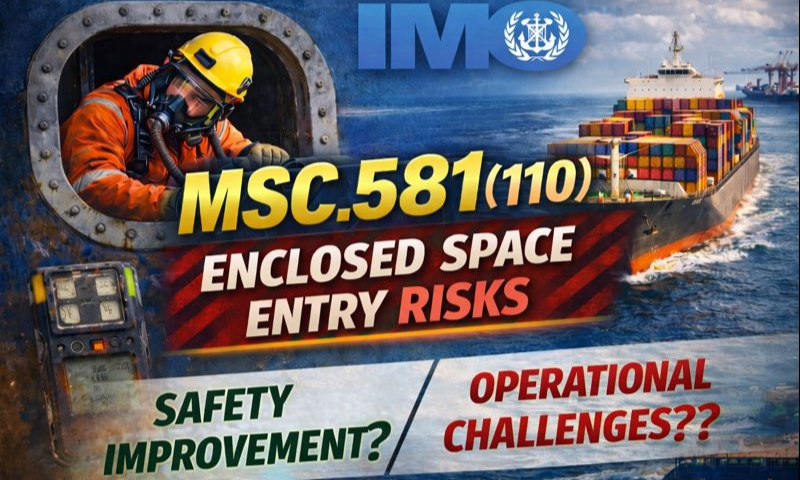
MSC.581(110): Enclosed Space Entry — Key Pros, Cons, and Industry Impact
 Sea and Beyond
12 Jan 2026
2147 view
0
0 Comment
Enclosed space accidents remain one of the most persistent and fatal risks in maritime operations. Despite long-standing guidance under IMO Resolution A.1050(27), fatalities have continued—often involving multiple crew members attempting unplanned rescues.
In response, the IMO adopted Resolution MSC.581(110), introducing a significantly strengthened framework for enclosed-space entry. The resolution has been welcomed by safety advocates but viewed with caution by some shipowners and operators.
This article explores the key advantages, challenges, and operational impact of MSC.581(110), and what its success will ultimately depend on.
Key Advantages of MSC.581(110)
1. A Stronger and More Structured Safety Framework
MSC.581(110) establishes clearer procedures, defined roles, and formal authorization processes for enclosed-space entry.
This structured approach reduces reliance on informal or ad-hoc practices, which have historically contributed to serious accidents and fatalities.
Impact:
Greater consistency in risk management and a measurable reduction in unsafe entry practices.
2. Expanded and More Robust Gas Testing Requirements
One of the most significant improvements is the mandatory use of multi-gas detectors, including defined thresholds for carbon dioxide (CO₂)—a hazard often underestimated under the previous guidance.
Impact:
Improved detection of invisible atmospheric dangers and tighter control over entry conditions.
3. Enhanced Crew Competence and Emergency Preparedness
The resolution places strong emphasis on training, assigned competence, and regular rescue drills. Crew members are expected not only to understand how to enter enclosed spaces safely but also how to respond effectively if something goes wrong.
Impact:
Reduced panic-driven rescue attempts and improved survivability in emergency situations.
4. Integration With ISM Safety Management Systems
By linking enclosed-space entry procedures directly to the ISM Code, MSC.581(110) improves documentation, traceability, and audit readiness.
Impact:
Better fleet-wide standardization, clearer accountability, and stronger safety governance.
5. Broader Applicability Beyond Ship’s Crew
Unlike earlier guidance, the new resolution explicitly applies to contractors, surveyors, and port personnel, closing long-standing responsibility gaps.
Impact:
Clearer duty-of-care expectations and fewer gray areas during inspections, repairs, and surveys.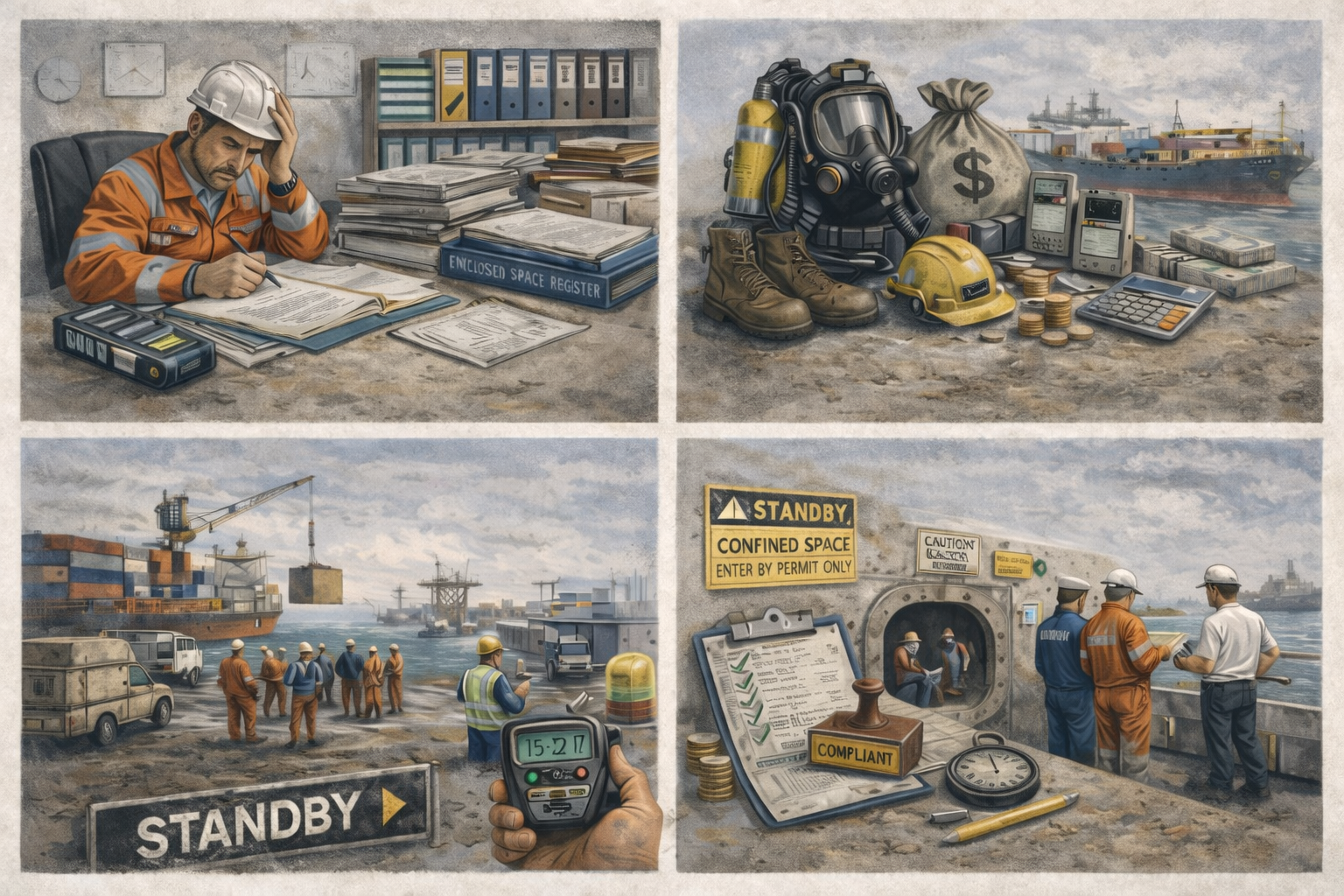
Key Challenges and Concerns
1. Increased Administrative Burden
The introduction of Enclosed Space Registers, formal permits-to-work, and detailed entry/exit records adds a substantial documentation workload—particularly challenging on vessels with limited manpower.
Concern:
Risk of crew time being diverted from operational safety to paperwork.
2. Higher Compliance Costs
Compliance often requires investment in:
• New gas detection equipment
• Calibration regimes
• Additional PPE
• Enhanced training programs
For smaller operators or older vessels, these costs can be significant.
Concern:
Financial pressure on operators working with narrow operating margins.
3. Potential Operational Delays
Formal authorization, mandatory testing, and standby personnel requirements can slow:
• Maintenance activities
• Cargo operations
• Inspections and surveys
Concern:
Reduced operational flexibility and longer port turnaround times.
4. Risk of a “Tick-Box” Safety Culture
A heavily procedural system risks becoming document-driven rather than safety-driven, where compliance is measured by completed forms rather than genuine hazard awareness.
Concern:
Safety intent diluted by mechanical compliance.
5. Variable Interpretation and Practical Challenges
The risk-based nature of MSC.581(110) may lead to inconsistent interpretation across:
• Fleets
• Flag states
• Classification societies
Concern:
Uncertainty in enforcement and uneven application of standards.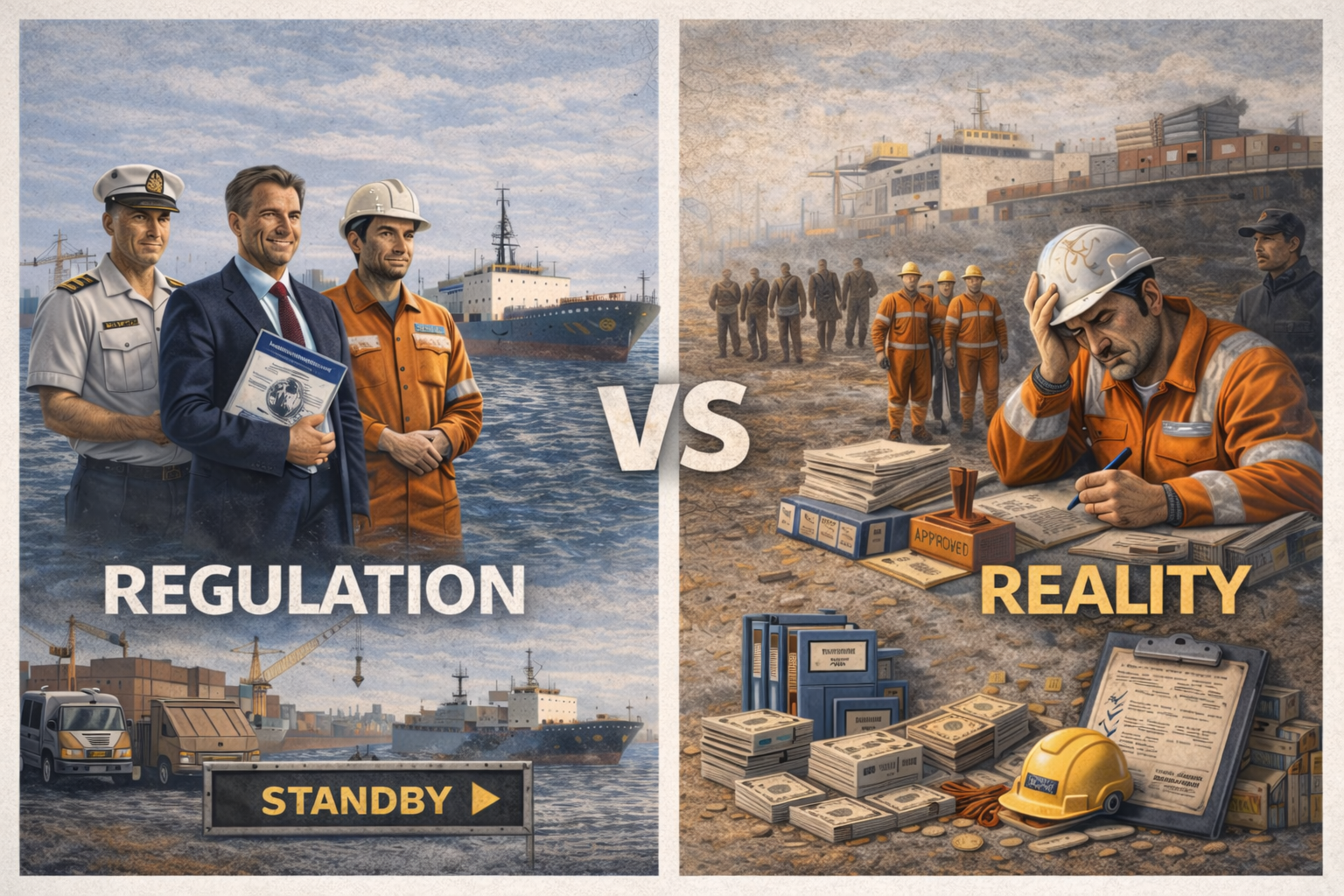
Conclusion: Regulation vs. Reality
MSC.581(110) has been strongly supported by flag states, classification societies, P&I insurers, and maritime safety advocates, who see it as a decisive step toward reducing preventable enclosed-space fatalities.
At the same time, shipowners, smaller operators, and some seafarer groups have raised valid concerns about administrative load, costs, and operational disruption.
Ultimately, the effectiveness of MSC.581(110 will depend less on the regulation itself and more on how it is implemented.
• When embraced as a living safety process, it has the potential to dramatically improve enclosed-space safety.
• When treated purely as a compliance obligation, its benefits risk being diluted.
Only time will tell whether MSC.581(110 truly marks a shift toward a safety-first culture—one that prioritizes preparation, competence, and controlled entry over convenience.



Sea and Beyond
At Sea and Beyond we strive for authenticity and honesty in our work. Our mission is to help “You take a well informed decision” and we try and support you through our various services like
- Mentoring
- Skill enhancement/Education
- Job Opportunities and
- Your branding (CV and LinkedIn preparation)
We have a team of writers who conduct thorough research to ensure the accuracy of the content and for the clarity in communication. We will be happy to support you wherever required
Leave a comment
View more
Give your career a boost with S&B professional services.
CV Prep/Evaluation Prep Service
 SeaCommerce
Shop maritime books & essentials
DG Medical Examiners
Find approved doctors near you
Tools & Calculators
Free maritime tools for seafarers
More Jobs
Ship management
Gujarat
Operations Executive – Tra..
Agency and Logistics
Mumbai
Vessel Performance Analyst..
Sales and Marketing
Mumbai
Manager – Sales (ISO Tank)..
Interview Prep/Mentoring
Find your polestar with the host of experts available on our platform
Know more

Contact Us