
This focused course dives into the rapidly evolving world of the Internet of Things (IoT) and its transformative impact on the maritime industry. Starting with core concepts of IoT and IIoT, the course covers their general applications and zeroes in on real-world maritime use cases.
Learners will explore key IoT components such as sensors, devices, edge computing, and communication protocols, along with the IoT technology stack, cloud platforms, and applications. Topics like predictive maintenance, data flow, and IoT in action (AGWA) are paired with hands-on exercises and live demonstrations.
Designed for maritime professionals and enthusiasts, this course provides a clear, practical path to understanding and implementing IoT solutions in modern shipping and offshore operations.

Sea and Beyond
At Sea and Beyond we strive for authenticity and honesty in our work. Our mission is to help “You take a well informed decision” and we try and support you through our various services like
- Mentoring
- Skill enhancement/Education
- Job Opportunities and
- Your branding (CV and LinkedIn preparation)
We have a team of writers who conduct thorough research to ensure the accuracy of the content and for the clarity in communication. We will be happy to support you wherever required
Rating:
Price:
₹ 699
Language:
English
Length:
03:00:00
Intended for:
Reference:
Topics:
4 Sections . 29 lectures . 4h 20m total length
8 min
1.1 IOT use case in Maritime
Get a glimpse through this free preview on how IoT technologies are being applied across the maritime industry to create smarter, data-driven operations.
6 min
2.1 Topic Introduction | Part 1
Explore how the Internet of Things (IoT) is revolutionizing the maritime industry. This course covers key concepts, technologies, and real-world use cases—empowering professionals to apply IoT for smarter, more connected maritime operations.

12 min
2.2 What is IOT and IIOT | Part 2
IoT is a network of connected devices that collect and share data to enable smarter decision-making.
IIoT applies this concept to industrial settings—like maritime—using sensors and real-time data to improve safety, efficiency, and operations.
4 min
2.3 General Use of IOT | Part 3
IoT is widely used across industries to enable real-time monitoring, automation, and data-driven decisions. From smart homes and healthcare to logistics and transportation, IoT improves efficiency, reduces downtime, and enhances user experiences through connected devices and systems.
8 min
2.4 IOT use case in Maritime | Part 4
In maritime, IoT is used for real-time vessel tracking, fuel monitoring, predictive maintenance, cargo condition monitoring, and port automation. These applications improve operational efficiency, reduce costs, and enhance safety across the shipping and offshore industries.
5 min
2.5 Why IOT now? | Part 5
Advances in connectivity, cloud computing, and sensor technology have made IoT more accessible and cost-effective. With growing demands for efficiency, safety, and sustainability, industries like maritime are adopting IoT to gain real-time insights, automate operations, and stay competitive in a digital era.
3 min
2.6 Key Components of IOT | Part 6
The IoT technology stack includes layers like devices, connectivity, data processing, cloud platforms, and applications. Edge applications bring computation closer to the source—processing data locally on the device—enabling faster responses, reduced latency, and improved reliability in real-time maritime operations.
2 min
2.7 IOT Technology Stack and EDGE Application | Part 7
The IoT stack includes devices, connectivity, data processing, cloud platforms, and applications—working together to collect, transmit, analyze, and use data for smart operations.
5 min
2.8 IOT - Sensors | Part 8
IoT sensors collect real-time data from the environment—such as temperature, pressure, or motion—and send it to connected systems for monitoring and analysis. They are the foundation of any IoT solution.
10 min
2.9 IOT - Devices | Part 9
IoT devices combine sensors, processors, and communication modules to collect and transmit data. They can range from simple trackers to complex onboard systems used in ships and industrial equipment.
21 min
2.10 IOT - Communication | Part 10
IoT communication enables devices to transmit data using protocols like Wi-Fi, Bluetooth, cellular, or satellite. It ensures reliable, real-time data flow between sensors, systems, and cloud platforms.
3 min
2.11 IOT - Cloud Platform | Part 11
An IoT cloud platform stores, processes, and analyzes data from connected devices. It enables remote monitoring, visualization, and integration with applications for smarter decision-making and automation.
4 min
2.12 IOT - Cloud Application | Part 12
IoT cloud applications provide user-friendly interfaces to access, visualize, and manage data from connected devices. They turn raw data into actionable insights for monitoring, alerts, and control.
13 min
2.13 IOT - IN ACTION | Part 13
"IoT in Action" showcases real-world applications of IoT in maritime—such as live vessel tracking, engine monitoring, and automated alerts—demonstrating how connected systems improve efficiency, safety, and decision-making.
4 min
2.14 AGWA (smart farming onboard) | Part 14
AGWA is an IoT-based smart farming system designed for maritime environments. It enables onboard cultivation by monitoring conditions like humidity, temperature, and soil moisture—optimizing resource use and supporting sustainable food production at sea.
26 min
2.15 Exercise | Part 15
This practical segment reinforces learning through hands-on tasks based on the topics covered—such as sensors, communication, cloud platforms, and IoT applications—helping participants connect theory to real-world maritime scenarios.
34 min
2.16 Glimpse of Predictive Maintenance | Part 16
GThis segment introduces how IoT enables predictive maintenance by using real-time sensor data to detect potential issues before they lead to failures—helping reduce downtime, optimize repairs, and enhance safety in maritime operations.
3 min
2.17 Wrapup, Q & A Session | Part 17
An open forum for participants to ask questions, clarify concepts, and engage in discussion—ensuring deeper understanding of IoT applications and their impact on the maritime industry.
4 min
3.1 Introduction | Part 1
Kick-off session with an overview of the agenda and how today’s topics connect to real-world applications.
4 min
3.2 IoT Recap & Microcontroller Introduction | Part 2
Quick recap of Internet of Things (IoT) basics and an introduction to microcontrollers as the backbone of IoT systems.
3 min
3.3 Arduino vs ESP32 | Part 3
Understand the key differences between Arduino boards and ESP32, including processing power, connectivity, and use cases.
15 min
3.4 ESP32 Pinout | Part 4
Detailed walkthrough of ESP32 pin configurations, covering digital, analog, and special-purpose pins for different sensors and devices.

5 min
3.5 Common Sensors for Arduino & ESP32 | Part 5
Overview of frequently used sensors (temperature, humidity, motion, gas, etc.) and how they integrate with microcontrollers.

31 min
3.6 Demonstration | Part 6
Hands-on demo showing sensor connectivity and data flow with Arduino/ESP32 for better practical understanding.

1 min
3.7 ESPHome & Home Assistant Overview | Part 7
Introduction to ESPHome for firmware management and how it integrates with Home Assistant for smart automation.

5 min
3.8 KNIME Overview | Part 8
Exploring KNIME as a low-code/no-code platform for data workflows and IoT analytics.

3 min
3.9 Home Assistant Demo | Part 9
Live demonstration of Home Assistant in action, showing real-time sensor monitoring and smart device control.
7 min
4.1 The 3Ds Maritime Tech and the Emerging Innovators | Part 1
Learn the difference between digitisation, digitalisation, and digital transformation, and explore the key players driving innovation in the maritime industry
11 min
4.2 The Future Course of Maritime Digital Transformation | Part 2
Explore upcoming digital trends and innovations that will define the next era of global maritime trade.
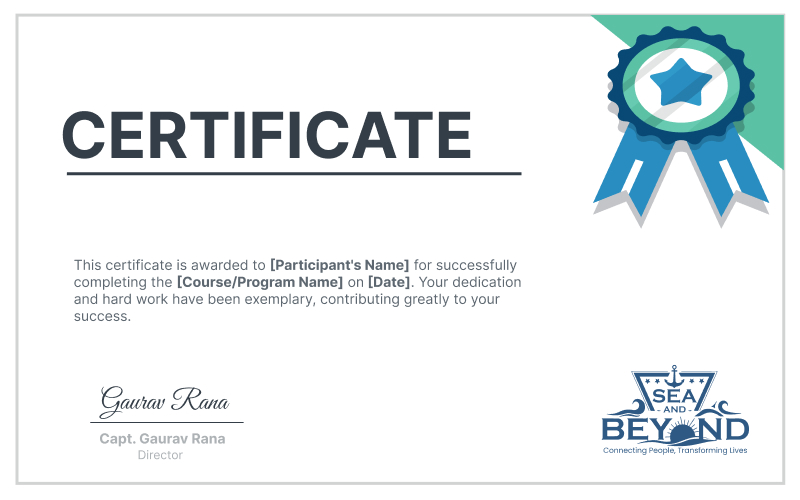
Successful completion of this course will earn you a certificate of completion from Sea and Beyond. This certificate will be emailed to you and you could also share and show it on LinkedIn Please click on the button below to purchase the certificate.






Contact Us