
Seafarer Medical Fitness in India: Eligibility, Validity & Rejection
 Akshay Shrivastava
21 Apr 2026
11220 view
0
7 Comment
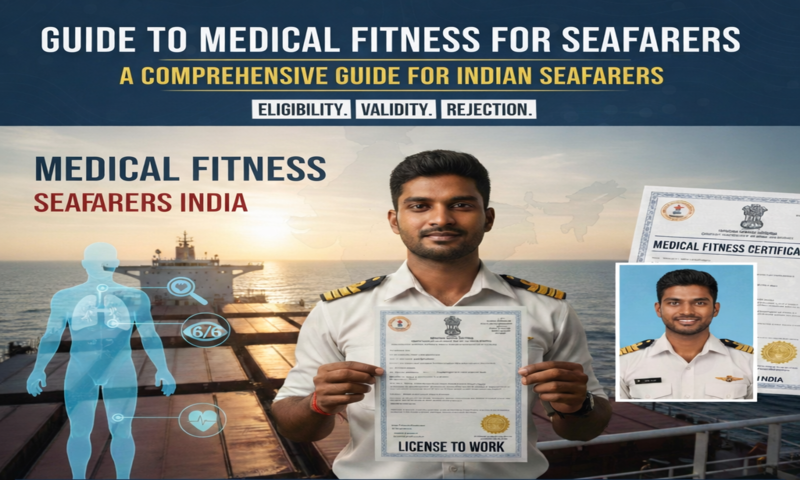
For Indian seafarers, a medical fitness certificate is more than just a regulatory hurdle; it is a "license to work" that ensures they can safely withstand the rigors of a maritime career. The Directorate General of Shipping (DGS), under the Ministry of Ports, Shipping and Waterways, mandates strict medical standards governed by the Merchant Shipping (Medical Examination) Rules and updated through frequent MS Notices. These rules align Indian standards with international conventions like STCW and MLC 2006.
Eligibility and Administrative Prerequisites
Eligibility for a maritime medical examination is determined by a combination of age, proper documentation, and the seafarer's specific rank.
- Age Requirements: Candidates must be at least 16 years of age to apply. Most pre-sea training institutes in India require candidates to be between 17 and 19 years old for entry-level cadet roles.
- Approved Practitioners: The examination must be conducted exclusively by DGS-approved medical examiners. Certificates issued by personal or unauthorized doctors are invalid for maritime service.
- Mandatory Identification: Seafarers must present official photo ID, such as a Passport, Continuous Discharge Certificate (CDC), or Seafarer’s Identity Document (SID). The doctor must verify these documents and record the INDoS (Indian National Database of Seafarers) number.
Standardized Medical Requirements Table
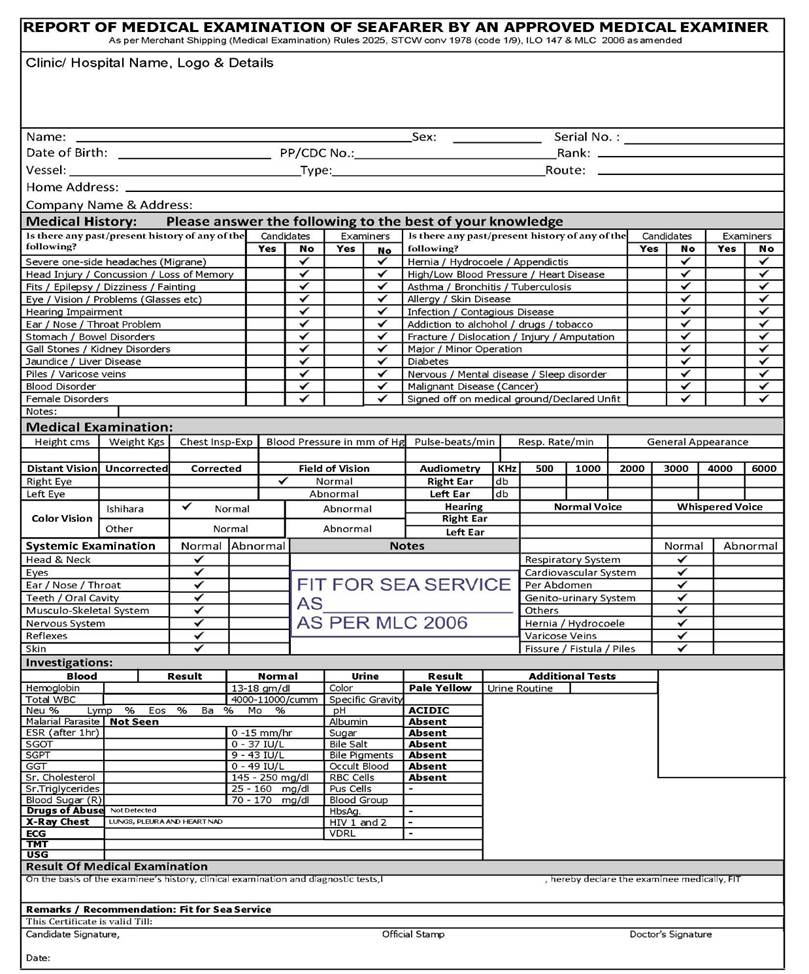
In 2025, the DGS introduced a standardized framework of mandatory minimum investigations to ensure consistency across all approved clinics. The following table outlines the core benchmarks for fitness.
| Category | Requirement / Benchmark | Departmental Specifics |
|---|---|---|
| Distant Vision | 6/6 in better eye; 6/9 in other (unaided). | Deck: No external aids allowed. Engine: 6/12 in each eye or 6/9 & 6/18 (glasses permitted). |
| Near Vision | Ability to read Snellen N5 or N8 chart at 30-50cm. | Required for all departments to read gauges and charts. |
| Colour Vision | Pass Ishihara test (Normal perception). | Deck: Any degree of colour blindness is a rejection. Engine: Mild deficiency may be reviewed. |
| Hearing | Hear at least 40 dB at all audible frequencies. | Both ears tested separately; hearing aids are not allowed for joiners. |
| Physical Stature | Height: 157 cm ; Weight: 48 kg | 5 cm height relaxation and 45kg weight requirement for candidates from North-East India, islands or hilly regions. |
| BMI |  | Ideal range: 18.5 to 25. BMI > 30 (Obese) triggers cardiac stress tests. |
| Blood Pressure | Below 150/90 (Freshers); Below 160/100 (In-service). | Systolic pressure > 160 & Diastolic pressure repeatedly > 100 mmHg is disqualifying. |
| Dental Health | Minimum 14 dental points out of 22. | Based on functional pairs of healthy or repairable teeth. |
The Clinical Investigation Framework
The examination includes a comprehensive suite of laboratory and diagnostic tests to detect asymptomatic conditions.
- Blood Panel: Includes Complete Blood Count (CBC), Fasting Blood Sugar, Lipid Profile (Cholesterol), and Liver/Renal Function Tests (SGPT, GGT, Creatinine).
- Infectious Disease Screening: Mandatory screening for HIV 1 & 2, Hepatitis A, Hepatitis B (HBsAg), Hepatitis C (HCV), and VDRL.
- Cardiac and Respiratory: Standard tests include an ECG for heart rhythm and Spirometry for lung function. A Chest X-Ray is mandatory to screen for Tuberculosis.
- Substance Abuse: Screening for drugs including Morphine, Marijuana, Cocaine, and Amphetamines is a standard part of the pre-sea medical.
Validity and Certification Cycles
A medical certificate is time-bound and must be valid at the time of joining a vessel.
- Adult Seafarers (18–65): Certificates are valid for a maximum of 2 years.
- Young Seafarers (<18): Validity is limited to 1 year to account for physiological growth.
- Senior Seafarers (>65): Validity may be restricted to the intended contract period only, with more frequent and stringent renewals required.
Rationales for Medical Rejection
Medical rejection is categorized into Temporary and Permanent unfitness based on the clinical prognosis.
Permanent Unfitness
Conditions that pose a high risk of sudden incapacity or are incompatible with life at sea:
- Neurological: Epilepsy or a history of seizures, even if currently managed.
- Cardiovascular: History of myocardial infarction, heart rhythm disorders, or use of an Implanted Cardioverter Defibrillator (ICD).
- Metabolic: Poorly controlled diabetes mellitus or diabetes with vascular complications.
- Sensory: Permanent blindness, diplopia (double vision), or colour blindness for navigational roles.
Temporary Unfitness
Remediable conditions that allow for re-examination after treatment:
- Infectious: Active Pulmonary Tuberculosis (until certified cured) or gastrointestinal infections.
- Lifestyle: High BMI (Obesity) or uncontrolled hypertension that can be lowered through medication and diet.
- Surgical/Dental: Conditions like hernia, kidney stones, or dental caries, provided they are surgically corrected or treated.
Wellness Tips for Maintaining Fitness
- BMI Management: Avoid high-sugar and high-fat foods. A BMI above 30 often leads to additional, expensive cardiac tests.
- Pre-Exam Prep: Avoid alcohol, smoking, and heavy meals for at least 48 hours before your medical examination.
- Dental Hygiene: Visit a dentist annually to ensure you maintain the required 14 dental points.
- Hydration: Maintain high water intake, as dehydration can affect kidney function tests during the blood panel.
Conclusion
While the requirements stated here are as per the DG shipping notices and MLC requirements, Some Flag states often have stringent medical requirements for seafarers working on their ships. In this case, Before boarding the vessel of such a flag, A flag state approved medical examination has to be conducted.
When you step aboard, you are not just responsible for yourself. your part of a crew, ensuring everyone’s safety. A medical fitness certificate is a promise you make to yourself, to your colleagues, and to the shipping company. And though it might seem like just a piece of paper, it is a lifeline, ensuring you are prepared for the challenges of the ocean.
Before you head for your medical exam, take a moment to care for your health, watch your blood pressure, sleep well, and be honest about your medical history. With preparation, you will not just pass, you will begin your journey at sea with confidence.



Akshay Shrivastava
Akshay Shrivastav sailed as a Third Officer on oil and chemical tankers before deciding to chart a different course. An IMU Nautical Science graduate and incoming HEC Paris MBA candidate, he writes informational blogs for sailors — breaking down DGS circulars, certification processes, and career transition pathways so merchant navy officers can make well-informed decisions, whether they're sailing or planning the move ashore.
Leave a comment
View more
Give your career a boost with S&B professional services.
CV Prep/Evaluation Prep Service
 SeaCommerce
Shop maritime books & essentials
DG Medical Examiners
Find approved doctors near you
Tools & Calculators
Free maritime tools for seafarers
More Jobs
Marine tech
Mumbai
Project Engineer – Marine ..
Marine tech
Mumbai
Project Engineer – Mechani..
Ship management
Mumbai
Vessel Performance Analyst..
Interview Prep/Mentoring
Find your polestar with the host of experts available on our platform
Know more

Contact Us