Voyage Performance: One of the Fastest-Growing Career Paths in Modern Shipping
 Capt. Ketan Bhatia
17 Jan 2026
2558 view
5
4 Comment
For decades, a seafarer’s career followed a predictable trajectory—sea time, higher certificates, command and eventually a shore role in operations or training. Today, however, the maritime industry is undergoing a digital transformation that has created entirely new career pathways. One of the most promising among them is Voyage Performance Management. Voyage performance is no longer just about fuel savings or speed optimization. It has become a specialized profession at the intersection of marine operations, data analytics, emissions compliance, and decision support.
What Is Voyage Performance — From a Career Perspective?
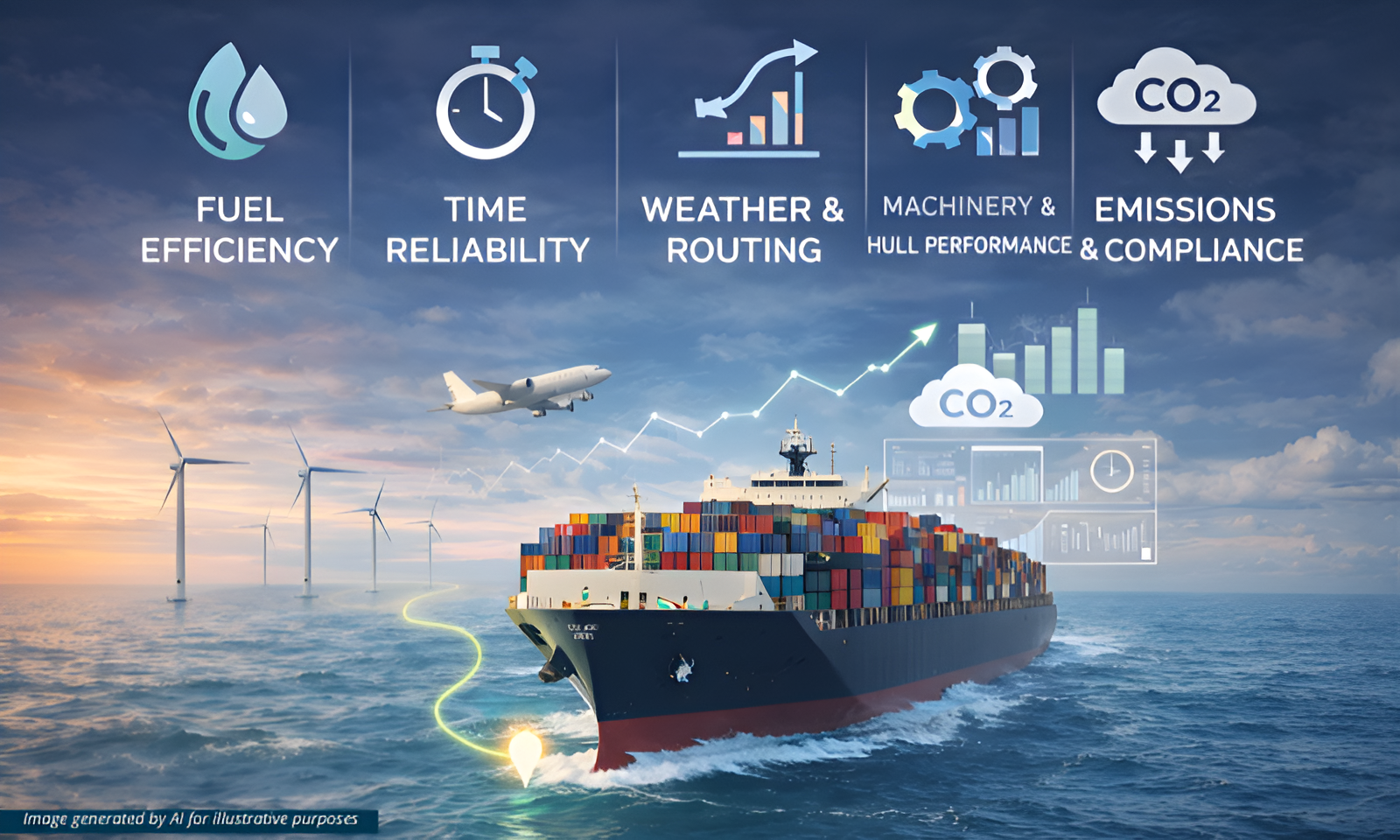
From a career standpoint, voyage performance focuses on analyzing how a vessel is operated and identifying measurable improvements across:
- Fuel efficiency
- Time and schedule reliability
- Weather and routing decisions
- Machinery and hull performance
- Emissions and regulatory compliance
Unlike traditional operations roles that react to events, voyage performance professionals anticipate, predict and optimize outcomes—often across an entire fleet.
Why Voyage Performance Is Becoming a Dedicated Role?
Several industry trends are driving demand for voyage performance specialists:
- Fuel costs make up 40–60% of vessel operating expenses
- Regulations such as EEXI, CII, EU ETS, and FuelEU Maritime
- Growing use of digital monitoring, AI, and automation
- Increasing pressure from charterers for transparent performance data
As a result, companies can no longer rely solely on masters’ reports or post-voyage analysis. They need dedicated professionals who understand both ship operations and data.
The Skill Set That Makes Voyage Performance Professionals Valuable
Voyage performance is a rare role that blends multiple disciplines.
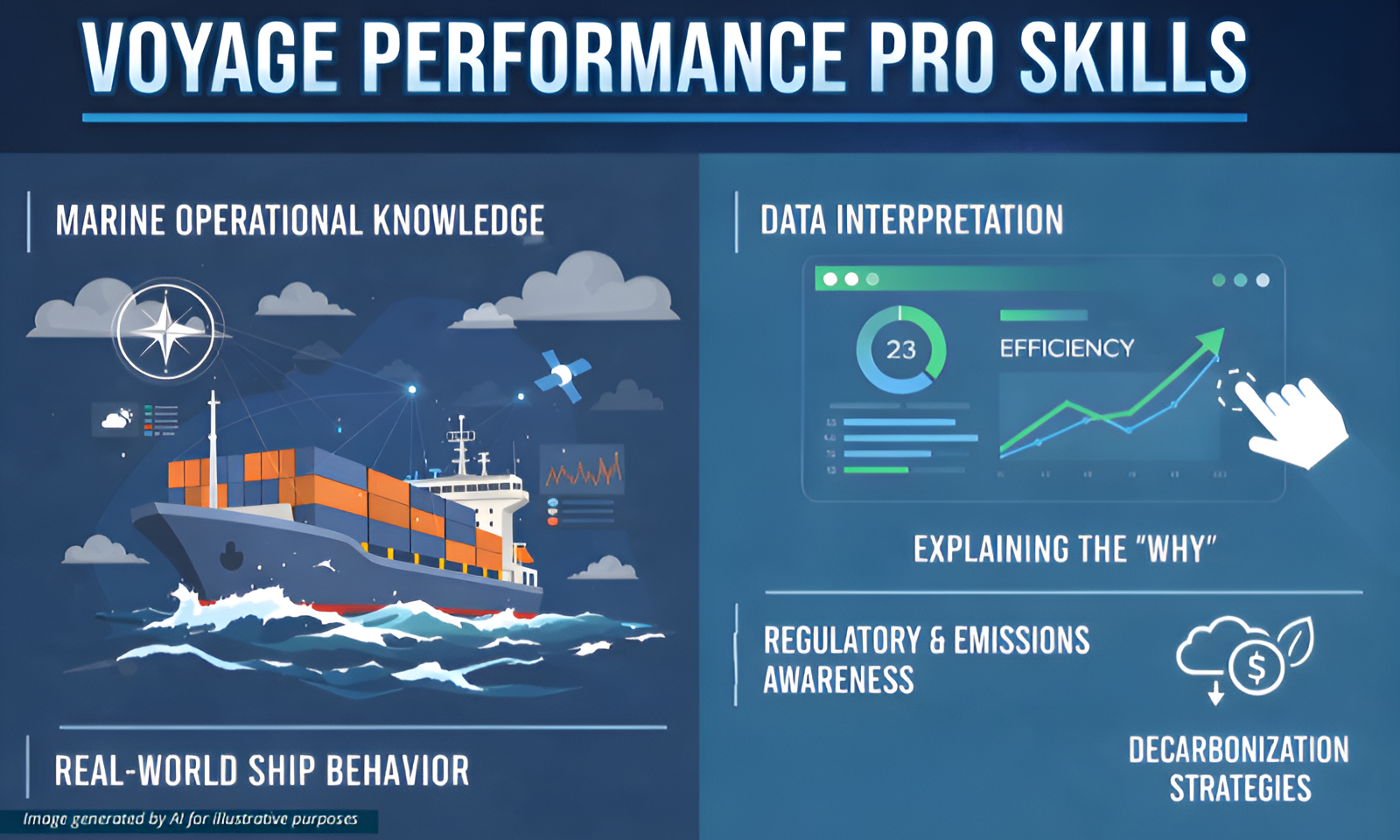
1. Marine Operational Knowledge
Understanding real-world ship behavior is critical:
- Speed and RPM management
- Weather impact on hull and propulsion
- Charter party performance clauses
- Bridge and engine room decision-making
This is where ex-deck and engine officers bring strong domain advantage.
2. Data Interpretation (Not Data Science)
Voyage performance professionals are not required to be coders, but they must:
- Interpret trends and deviations
- Identify abnormal fuel or speed behavior
- Compare vessels, voyages, and baselines
The value lies in explaining the “why” behind the numbers, not just presenting charts.
3. Digital Tools & Platforms
Modern roles involve working with:
- Voyage performance dashboards
- Fleet monitoring systems
- Weather routing engines
- IoT and sensor-driven data
Professionals act as the bridge between ship data and operational decisions.
4. Regulatory & Emissions Awareness
With decarbonization targets accelerating, voyage performance teams play a direct role in:
- CII management and forecasting
- Emissions reporting
- Supporting compliance strategies
- Carbon-aware routing decisions
This makes the role strategically important, not just operational.
Typical Career Roles in Voyage Performance
Voyage performance has evolved into multiple specialized shore roles:
- Voyage Optimisation Analyst
- Vessel Performance Analyst
- Emissions Analyst
- Fleet Performance Manager
- Digital Product Manager (Maritime Tech)
Many professionals transition into these roles directly from sea, often earlier than traditional shore pathways.
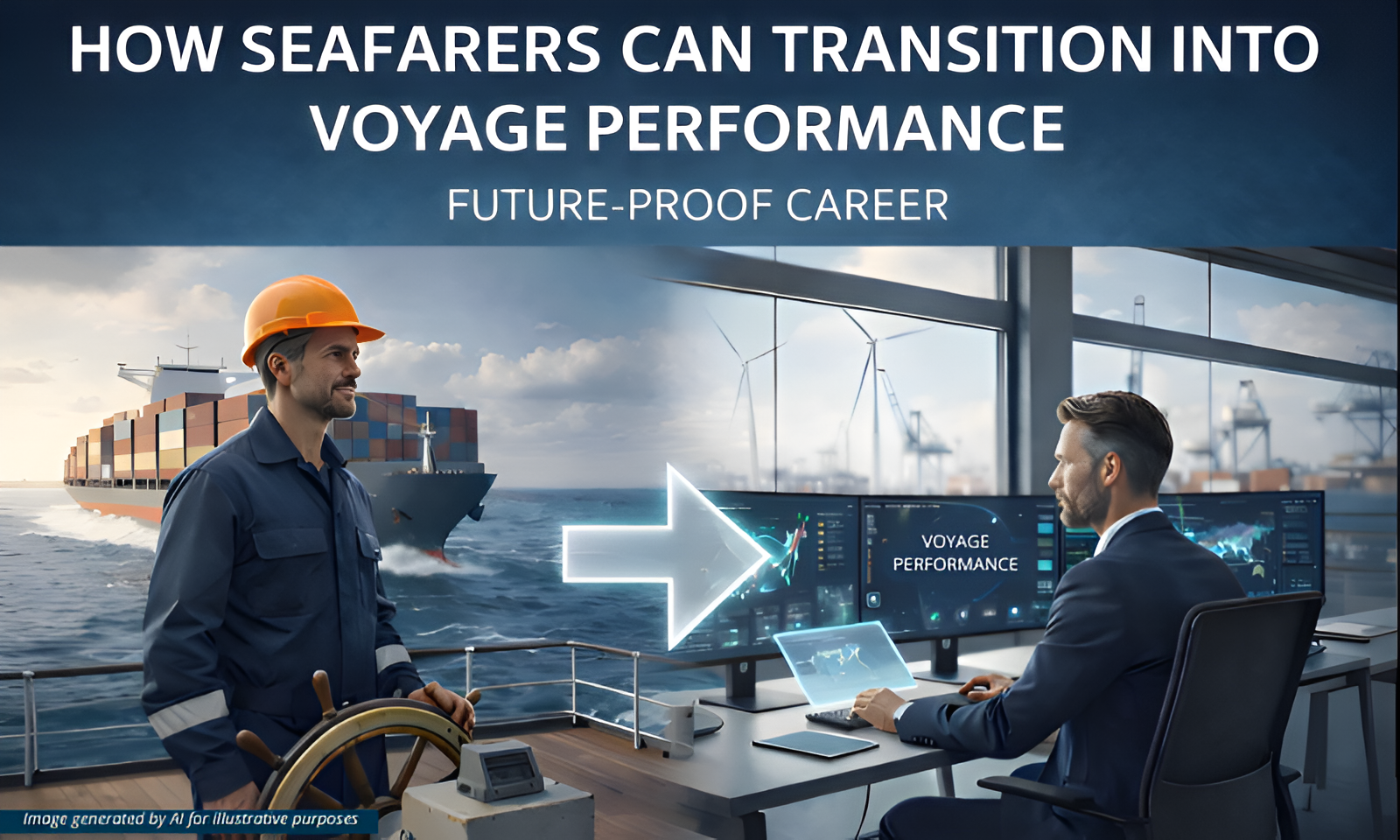
How Seafarers Can Transition Into Voyage Performance?
Voyage performance is one of the most natural shore transitions for seafarers because it builds on existing strengths.
Successful transitions typically involve:
- Strong understanding of ship operations
- Willingness to work with digital tools
- Interest in data-driven decision making
- Curiosity about “why performance varies” between voyages
Importantly, deep sea time is valuable—but mindset matters more than rank alone.
Why Voyage Performance Is Future-Proof?
Unlike some traditional roles, voyage performance is aligned with long-term industry direction:
- AI-driven decision support
- Digital twins and predictive analytics
- Autonomous performance monitoring
- Carbon-aware and energy-efficient routing
As ships become smarter, the need for professionals who can interpret, validate, and act on system recommendations will only increase.
Human Factors: The Differentiator in Career Growth
One of the most underrated aspects of voyage performance careers is human factors:
- Decision-making quality
- Communication between ship and shore
- Trust in digital systems
- Change management
Professionals who can combine technical insight with people skills tend to grow fastest into senior fleet and management roles.
Why Voyage Performance Is More Than Just a Job?
Voyage performance professionals:
- Directly influence cost, emissions, and safety
- Shape operational policy
- Support masters rather than override them
- Sit at the crossroads of technology and seamanship
It is one of the few maritime careers where experience at sea translates directly into measurable shore-side impact.
Final Thoughts
Voyage performance is no longer an “additional responsibility”—it is a standalone profession with clear growth, relevance, and longevity.
For seafarers looking beyond traditional pathways, and for maritime professionals seeking future-ready roles, voyage performance offers one of the strongest career opportunities in shipping today.



Capt. Ketan Bhatia
Capt. Ketan Bhatia is an experienced maritime professional with over two decades in the industry, combining extensive sailing experience with expertise in marine operations, port management, and vessel performance. Currently serving as Vessel Performance Manager at Geoserve, he focuses on optimizing vessel performance through digitalization and decarbonization initiatives. He believes that the fusion of human expertise with strong algorithms is key to improving operational efficiency in the maritime industry. A passionate learner, traveller and avid reader, he continues to explore and share insights on maritime technology and innovation.
Leave a comment
View more
Give your career a boost with S&B professional services.
CV Prep/Evaluation Prep Service
 SeaCommerce
Shop maritime books & essentials
DG Medical Examiners
Find approved doctors near you
Tools & Calculators
Free maritime tools for seafarers
More Jobs
Ship management
Gujarat
Operations Executive – Tra..
Agency and Logistics
Mumbai
Vessel Performance Analyst..
Sales and Marketing
Mumbai
Manager – Sales (ISO Tank)..
Interview Prep/Mentoring
Find your polestar with the host of experts available on our platform
Know more

Contact Us