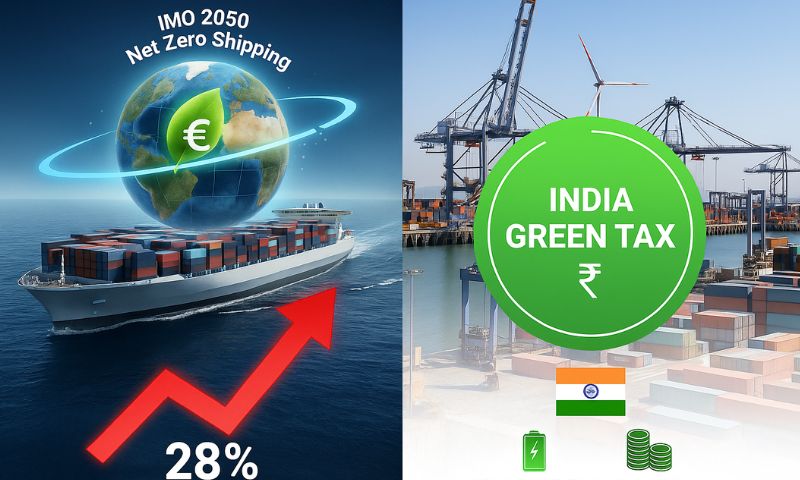
IMO Green Tax for Net Zero Shipping by 2050: The Best Option for India
 Capt. M. M Saggi
05 Nov 2025
1219 view
0
0 Comment
Introduction
The International Maritime Organization (IMO) has proposed a global carbon levy and a well-to-wake fuel standard to steer the shipping industry towards net zero emissions by 2050. While this initiative is commendable in its intent, its economic implications vary across countries. For India, a developing maritime nation with significant seaborne trade dependence, the impact could be substantial. This blog explores the potential consequences of the IMO Green Tax on India and presents an alternative model that balances environmental responsibility with economic fairness.
1. The Current Scenario
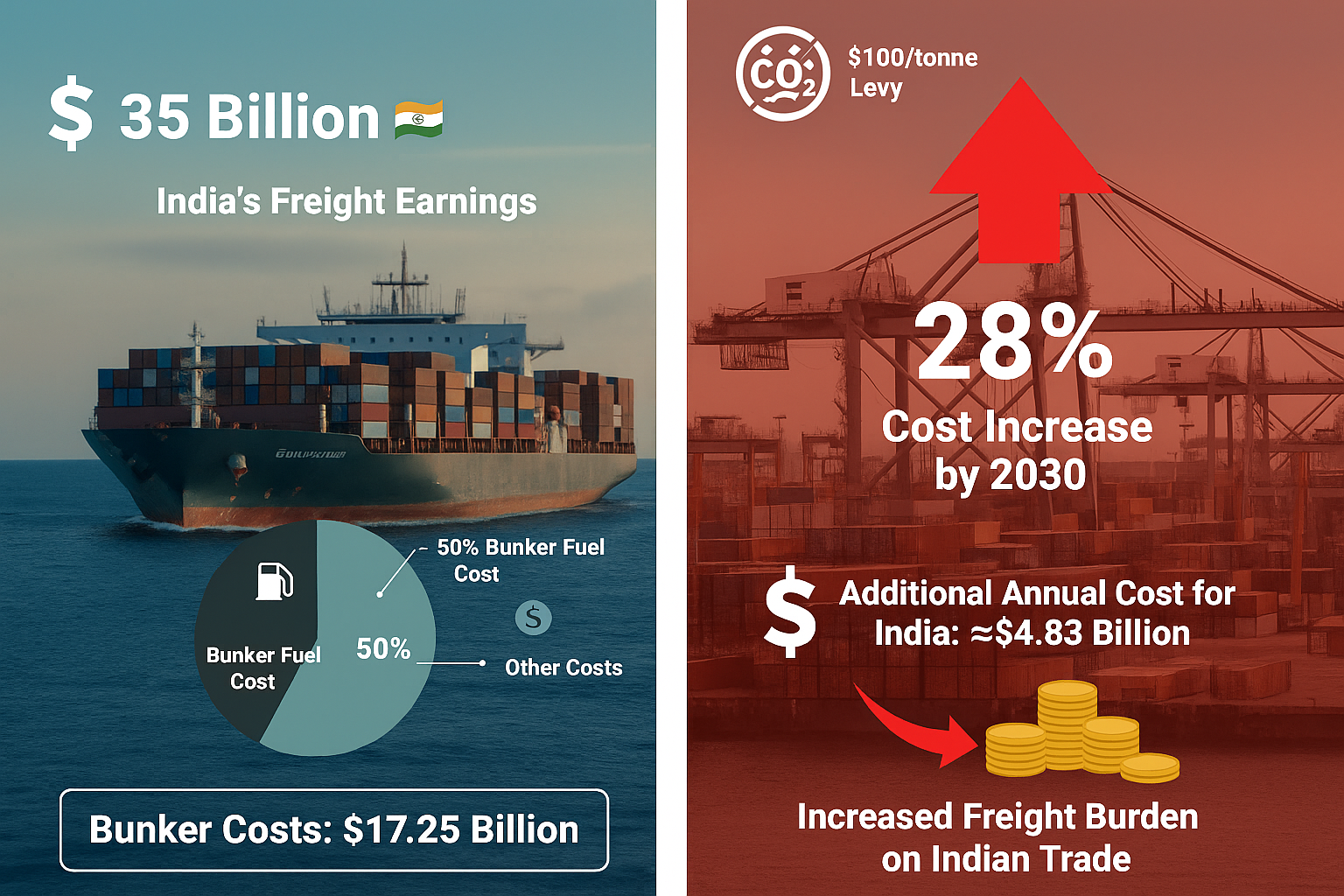
In 2024, India’s shipping freight earnings were estimated at approximately $35 billion. On average, bunker fuel accounts for 50% of ship operating costs. Assuming ships operate at break-even, bunker costs for carrying India’s seaborne trade would be around $17.25 billion.
2. Impact of IMO’s $100/tonne CO₂ Levy
The proposed $100/tonne CO₂ levy, coupled with a well-to-wake fuel standard, could increase global shipping costs by 28% by 2030. Translating this to India, the additional cost on bunker fuel would be approximately $4.83 billion annually, assuming the entire cost is passed on to end users. This directly increases the freight cost burden on Indian trade.
3. Economic Ripple Effect
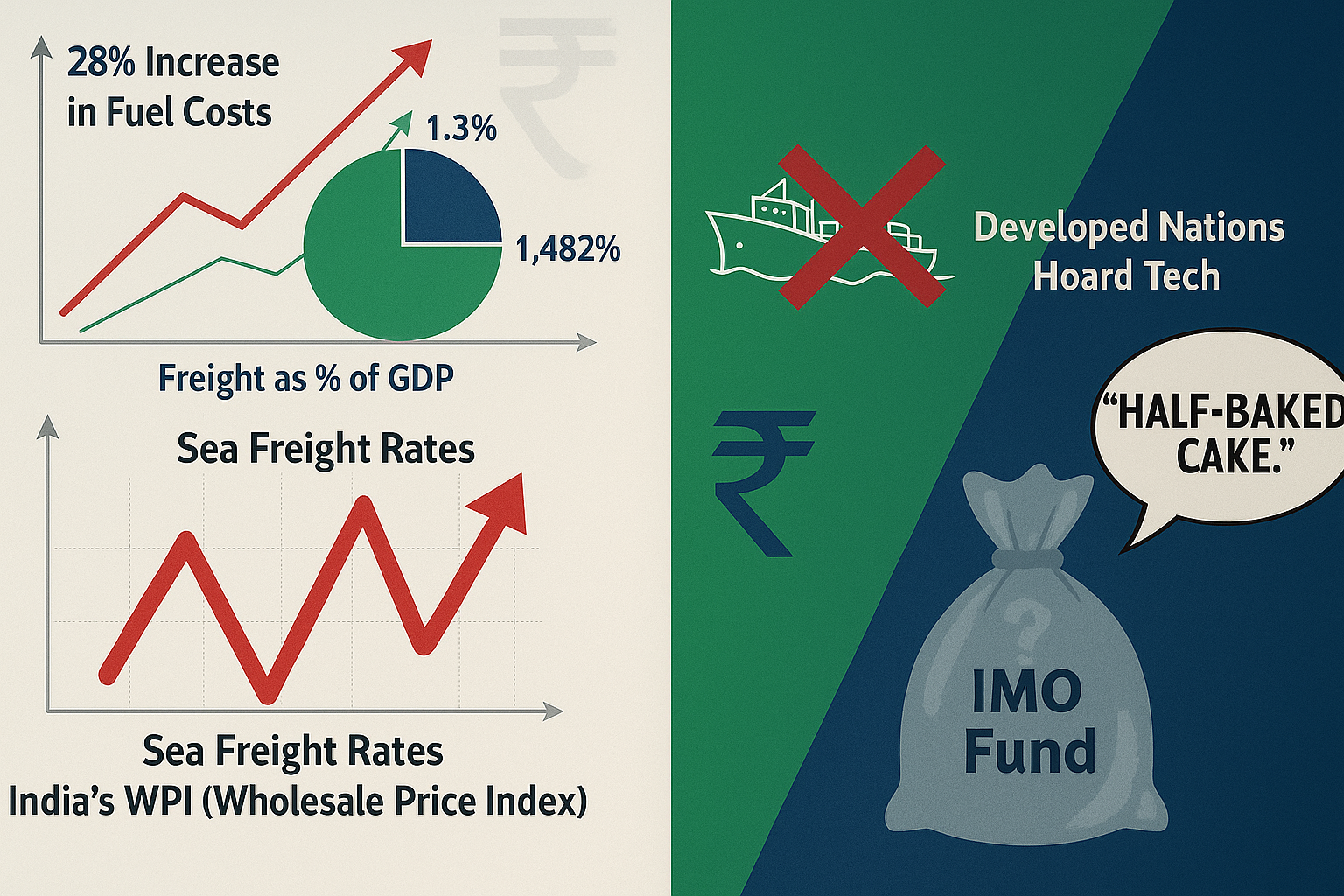
India’s seaborne freight is about 1.3% of GDP, with 0.65% attributed to bunker fuel. A 28% increase in fuel costs implies that freight as a share of GDP would rise to 1.482%. This might seem marginal, but freight rates have a multiplier effect across the economy, leading to inflationary pressure.
Historically, the correlation coefficient between sea freight rates and India’s Wholesale Price Index (WPI) has been 0.6, indicating a strong linkage between shipping costs and inflation. Hence, accepting the IMO’s levy without adaptation could result in higher inflation and reduced economic competitiveness.
4. Uncertain Gains from IMO’s Fund Allocation
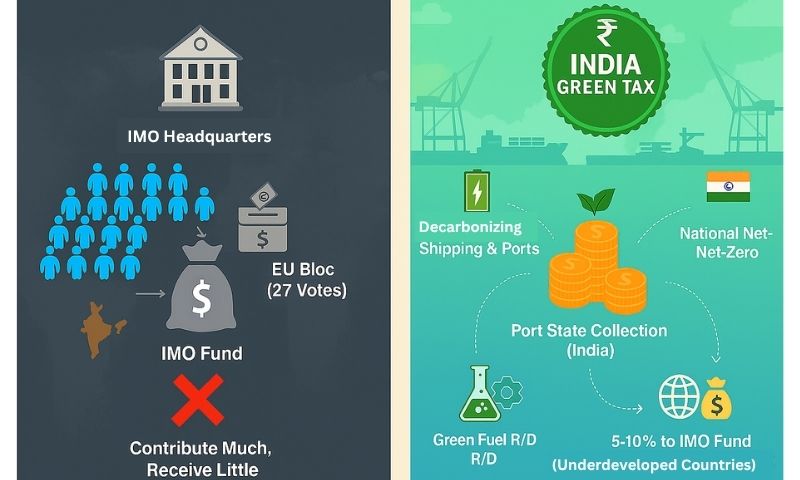
While proponents argue that countries like India could gain from technology transfers and financial assistance from the IMO fund, the reality remains uncertain. Developed nations with advanced green shipping technologies are unlikely to freely share proprietary innovations, preferring instead to sell finished products. Moreover, there is no clarity on how the IMO will utilize the collected funds, making the proposal appear, as some might say, a "half-baked cake."
5. Governance and Operational Challenges
The IMO, while technically competent, has limited experience managing and disbursing massive financial resources. Future conflicts among member states regarding fund allocation are inevitable, given that the EU bloc (27 votes) could dominate decision-making. Consequently, India may contribute significantly to the fund but receive disproportionately little in return.
6. A More Equitable Alternative: Port State Collection
Instead of routing the levy through IMO, a decentralized model could be adopted, where the port state (the country where ships call) collects the carbon levy. India can position this as a “Green Tax”, collected domestically and utilized for:
Decarbonizing Indian shipping and ports
Investing in green fuel infrastructure and R&D
Supporting national net-zero commitments
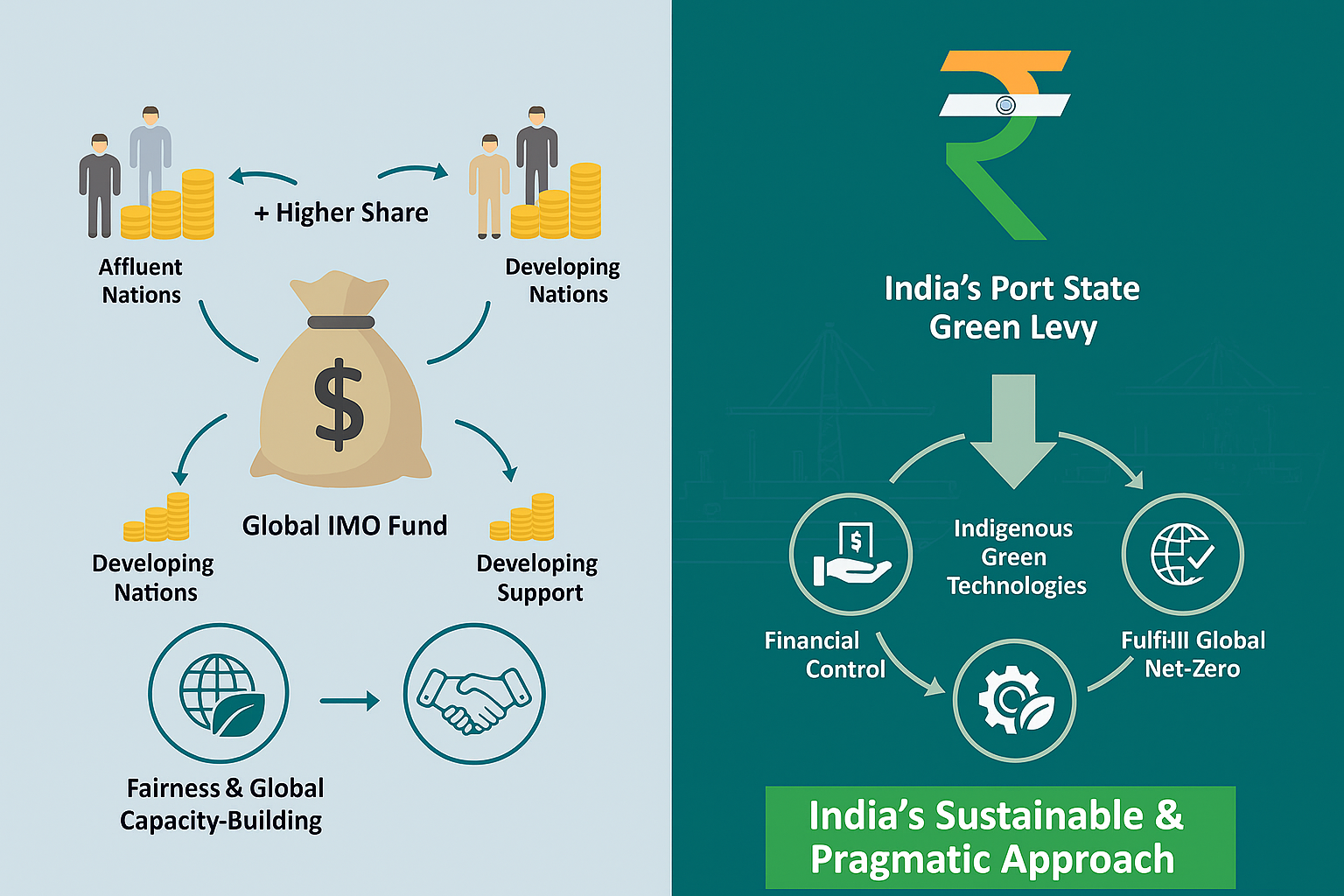
Each port state would declare its collections to IMO, and a small share (5–10%) could be contributed to IMO’s technical cooperation fund for assisting underdeveloped countries. This ensures transparency, local benefit, and global solidarity.
7. Leveraging Common but Differentiated Responsibility (CBDR)
Under the CBDR principle, more affluent member states could voluntarily contribute a higher share of their collection to the IMO’s global capacity-building fund. This approach promotes fairness and recognizes differing national capabilities while maintaining the momentum toward net zero.
8. The Way Forward for India
India should champion a balanced approach that acknowledges the urgency of climate action while safeguarding its economic interests. The Port State Green Levy model allows India to:
Retain financial control over collected revenues
Direct investments toward indigenous green technologies
Fulfill international obligations without external dependency
This system aligns with India’s sustainability goals and supports IMO’s 2050 net-zero vision in a pragmatic, inclusive manner.
Conclusion
The journey to net zero shipping by 2050 is non-negotiable, but the path must be equitable. For India, adopting a nationally managed Green Tax mechanism—aligned with IMO’s broader objectives—offers the best balance between climate responsibility and economic prudence. Such a model ensures that the cost of decarbonization strengthens India’s own maritime ecosystem rather than draining its resources into uncertain international funds.


Capt. M. M Saggi
One of the most respected and revered name in the maritime industry who has an holistic overview of how overall shipping functions at the world level as well as within India. Master Mariner (F.G), Extra master and MBA.
Ex-Director at Narottam Morajee Institute of Shipping, Ex-Nautical Advisor to govt. of India, Ex Additional Director General of Shipping, Ex Chief Examiner of mates,masters and extra masters. Ex Country head of casualty investigation. Lead Indian delegation to Maritime Safety Committee of IMO and International Oil Pollution Compensation fund meetings. Ex Trustee Mumbai, JNPT and Kandla Port
Leave a comment
View more
Give your career a boost with S&B professional services.
CV Prep/Evaluation Prep Service
 SeaCommerce
Shop maritime books & essentials
DG Medical Examiners
Find approved doctors near you
Tools & Calculators
Free maritime tools for seafarers
More Jobs
Ship management
Mumbai
Technical Officer – PMS
Ship management
Ahmedabad
Project Engineer | Civil ..
Ship management
Chennai
Electrical Superintendent ..
Interview Prep/Mentoring
Find your polestar with the host of experts available on our platform
Know more

Contact Us