
Legal Principles in Shipping Business
ICS Tutorship
7:38:00

Ms. Aufa Karnalkar
Free Lessons
The Legal Principles in Shipping Business programme provides a structured and exam-focused understanding of the legal framework governing commercial shipping and maritime trade. It is designed for students and professionals preparing for the Institute of Chartered Shipbrokers (ICS) examinations.
The shipping industry operates within a complex legal environment that regulates contracts, liabilities, cargo carriage, dispute resolution, and regulatory compliance. A clear understanding of these legal principles is essential for ship-owners, charterers, shipbrokers, and maritime professionals to ensure compliance and mitigate legal and commercial risks.
Overview of Legal Principles in Shipping Business
This comprehensive guide covers the core legal areas relevant to the ICS syllabus, including:
Introduction to Law
A foundation on legal systems, sources of law, court structures, and competition law, including the role of European Union regulations in maritime trade.
Contract Law
Key principles of contract formation, breach of contract, force majeure, and remedies, with specific application to shipping and chartering agreements.
Tort Law
Legal obligations relating to negligence, duty of care, vicarious liability, and remedies applicable to maritime operations.
Agency Law
Understanding the relationship between principals and agents, including shipbrokers, and the legal framework governing their roles and responsibilities.
Charterparties and Voyage Charters
The negotiation, execution, and legal implications of voyage, time, and bareboat charterparties, including freight, laytime, and demurrage.
Obligations under Time Charters
Key charter clauses, performance claims, hire agreements, and disputes arising in time charter contracts.
Bills of Lading
The legal significance of Bills of Lading in international trade, including their functions, types, and the evolution of electronic and digital Bills of Lading.
Carriage Conventions
A study of international conventions governing cargo transportation, including The Hague Rules, Hamburg Rules, and Rotterdam Rules.
Dispute Resolution
Methods of resolving maritime disputes, including arbitration, jurisdiction clauses, and mediation.
International Conventions and General Average
An overview of IMO conventions, SOLAS, ISPS Code, liability frameworks, Port State Control, oil pollution liability regimes, and General Average principles.
Who This Course is for
- ICS students preparing for Legal Principles in Shipping Business
- Aspiring shipbrokers and chartering professionals
- Maritime professionals involved in commercial shipping
- Seafarers transitioning to shore-based roles
Learning Outcome
By completing this programme, candidates will gain a clear and practical understanding of shipping law, confidently apply legal principles to commercial shipping scenarios, and be well prepared to answer ICS examination questions effectively.
Ms. Aufa Karnalkar
Ms. Aufa Karnalkar is a distinguished corporate lawyer and legal educator with a strong academic and professional background in maritime and corporate law. She holds an LLB from Pune and an LLM from Nottingham Trent University (UK), where her dissertation on the need for India to amend its shipping laws—considering recent changes in the UK—earned exceptional distinction.
An Advocate enrolled with the Bar Council of India and an SQE Solicitor candidate, she has several publications in leading legal journals and international conferences.
Alongside her corporate law practice, Ms. Aufa is actively involved in maritime and legal education, sharing her expertise across various platforms to shape the next generation of legal professionals.
Rating:
Price:
₹ 14999
Language:
English
Length:
7:38:00
Intended for:
Professionals preparing for ICS Examination
Reference:
Topics:
10 Sections . 20 lectures . 7h 38m total length
10 min
1.1 Ms. Aufa Sample video
Before you purchase the full course, we recommend watching this free sample video.
It covers a part of the explanation to help you understand the teaching style and content clarity.
If this helps you grasp the concept well, you'll find the complete paid course even more valuable!
15 min
2.1 Chapter 1 | Sources of Law, Types of law, Legal jargons
Topics covered in Introduction to Law By Ms. Aufa Karnalkar
- Sources of law- Legislation and Equity
- Types of law- Public law, private law, civil and criminal law
- Court hierarchy in England
- Legal jargons
- International courts- International Court of Justice
- European Court of Human Rights
- Judicial Committee of The Privy Council
- Arbitration
- Which jurisdiction governs the dispute?

11 min
2.2 Chapter 1 | Court Structure, European Union Law
Topics covered in Introduction to Law By Ms. Aufa Karnalkar
- Introduction
- Sources of law
- Types of law
- Court Structure
- European Union Law
- Competition law
- Conflict of Jurisdiction
17 min
2.3 Chapter 1 | Competition law, Conflict of Jurisdiction
Topics covered in Introduction to Law By Ms. Aufa Karnalkar
- Introduction
- Sources of law
- Types of law
- Court Structure
- European Union Law
- Competition law
- Conflict of Jurisdiction
25 min
3.1 Chapter 2 | Essentials of a Contract, Promissory estoppel
Topics covered in this session By Ms. Aufa Karnalkar
- Essentials of a Contract
- Express and implied terms in a contract
- Conditions and warranties of contract, Innominate terms
- Promissory estoppel
- Time is of the essence of contract- Meaning and impact on contract
- Remedies for breach of contract
- Repudiation and Termination of contract
- Restitution and liquidated damages
- Law Reform Frustrated Contracts Act 1943
- Force Majuere
12 min
3.2 Chapter 2 | Formation Of contract, Voidable contracts
Topics covered in this session By Ms. Aufa Karnalkar
- Introduction
- Formation Of contract
- Promissory estoppel
- Voidable contracts
- Express and implied terms
- Classification of terms
- Repudiation of contract
- Exclusion clauses
- The doctrine of frustration Of contract
- Force majeure clauses
- Special statutory provisions
- Rernedies for breach of contract
- Rernoteness of damage
19 min
3.3 Chapter 2 | Express and implied terms, Classification of terms
Topics covered in this session By Ms. Aufa Karnalkar
- Introduction
- Formation Of contract
- Promissory estoppel
- Voidable contracts
- Express and implied terms
- Classification of terms
- Repudiation of contract
- Exclusion clauses
- The doctrine of frustration Of contract
- Force majeure clauses
- Special statutory provisions
- Rernedies for breach of contract
- Rernoteness of damage
25 min
3.4 Chapter 2 | Repudiation of contract, Exclusion clauses
Topics covered in this session By Ms. Aufa Karnalkar
- Introduction
- Formation Of contract
- Promissory estoppel
- Voidable contracts
- Express and implied terms
- Classification of terms
- Repudiation of contract
- Exclusion clauses
- The doctrine of frustration Of contract
- Force majeure clauses
- Special statutory provisions
- Rernedies for breach of contract
- Rernoteness of damage
5 min
3.5 Chapter 2 | Doctrine of frustration Of contract
Topics covered in this session By Ms. Aufa Karnalkar
- Introduction
- Formation Of contract
- Promissory estoppel
- Voidable contracts
- Express and implied terms
- Classification of terms
- Repudiation of contract
- Exclusion clauses
- The doctrine of frustration Of contract
- Force majeure clauses
- Special statutory provisions
- Rernedies for breach of contract
- Rernoteness of damage
42 min
4.1 Chapter 3 | Definition of Tort, Duty of care and breach duty
Topics covered in this session By Ms. Aufa Karnalkar
- What is a tort?
- Definition of Tort
- Negligence and contributory negligence
- Duty of care and breach of that duty
- Remoteness of damage
- Vicarious liability and Tot in employment
- Defences
- Libel and slander
- Defamation
- Misrepresentation
- Tort of conversion
76 min
4.2 Chapter 3 | Common torts, Contributory negligence
Topics covered in this session By Ms. Aufa Karnalkar
- Introduction
- Common torts
- Negligence
- Duty care
- Breach Of Duty
- Causation
- Contributory negligence
- Remoteness of damage
- Vicarious liability
- The Misrepresentation Act 1967
- Statements of opinion
- Remedies in tort
09 min
5.1 Chapter 4 | Agency, creation and types, Commercial Agents
Topics covered in this session By Ms. Aufa Karnalkar
- What is agency, creation and types
- The Commercial Agents (Council Directive) Regulations 1993
- Ratification of agency
- Renumeration for agency
- Termination of agency
- Breach of warranty of authority
7 min
6.1 Chapter 5 | Negotiation of a charter party, Time charter parties
Topics covered in this session By Ms. Aufa Karnalkar
- Introduction
- Negotiation of a charter party
- Voyage charter parties
- Time charter parties
- Demise or bareboat Charter parties
- Analysis of a voyage charter party
- Freight
- Dead freight
- Lumpsurn freight
- Arrived ship
- The ship must be ready and in a fit condition to receive the cargo
- Notice of readiness (NOR)
- Laytime
- Demurrage
- Cesser clause
- Implied terms in charter parties
- The incorporation of the Hague or Hauge Visby Rules into charters
40 min
7.1 Chapter 6 | Functions of bills of lading, types, carriage
Topics covered in this session By Ms. Aufa Karnalkar
- Functions of bill of lading
- Types of bill of lading
- Carriage of Goods by Sea Act 1971, Carriage of Goods by Sea Act 1992, Hague Visby Rules
- Understanding Bills of Lading and how it is different from Charterparty agreement.
- UCP 600 and obtaining Letters of Credit
- Way bill and electronic bill of lading, sea waybill Combined transport bill of lading
- Right of lien
79 min
8.1 Chapter 7 | Carriage Conventions, The Hague Rules
Topics covered in this session By Ms. Aufa Karnalkar
- Carriage Conventions
- The Hague Rules
- Application of the Hagué Visby Rules
- The operation of the Hague-Visby Rules
- The Hamburg Rules
- The Rotterdam Rules
- Private and common carriers
8 min
9.1 Chapter 8 | Arbitration, Mediation, Work of admiralty court
Topics covered in this session By Ms. Aufa Karnalkar
- Arbitration- benefits, procedure, NY Convention, Arbitration Award
- Mediation
- Work of admiralty court
- United Nations Commission on International Trade Law enacted the Convention on the Limitation Period in the International Sale of Goods (Limitation Convention).
28 min
9.2 Chapter 8 | Choice of law and Juridiction clauses
Topics covered in this session By Ms. Aufa Karnalkar
- Arbitration
- Choice of law and Juridiction clauses
- The conduct of an arbitration
- Arbitration compared With High Court proceedings
- Mediation
01 min
9.3 Chapter 8 | Conduct of an arbitration
Topics covered in this session By Ms. Aufa Karnalkar
- Arbitration
- Choice of law and Juridiction clauses
- The conduct of an arbitration
- Arbitration compared With High Court proceedings
- Mediation
12 min
10.1 Chapter 9 | International Maritime Organization, ISM Code
Topics covered in this session By Ms. Aufa Karnalkar
- International Maritime Organization IMO- IMO 4 Pillars, Structure
- SOLAS Convention
- ICC Roles for a Combined Transport Document
- ISM Code
- Ship arrest and Port state control
- Other important Maritime Conventions
17 min
10.2 Chapter 9 | International conventions, Athens Convention
Topics covered in this session By Ms. Aufa Karnalkar
- Introduction
- The international Maritime Organization (IMO)
- International conventions
- ICC Roles for a Combined Transport Document
- UNCTAD/ICC Rules for Multi-Modal Transport
- Athens Convention
- Safety ofLife at Sea Convention (SOLAS) 1976
- International Safety Management Code (ISM Code)
- The international Ship and Port Facilities Security (ISPS) Code
- Port State Control
- Ownership of Ships
- Oil pollution
- International Convention on Civil Liability for Pollution Damage Caused by Bunker Oil 2001
- "International Convention On Liability and Compensatibn for damage in connection with the carriage of Hazardous and Noxious Substances by Sea 1996
- The HNS Convention 1996 and2010 Protocol
- The HNS Convention 2010"
- The Arrest Conventions 952 and 1 999
- General average
- The Amended Jason Cause
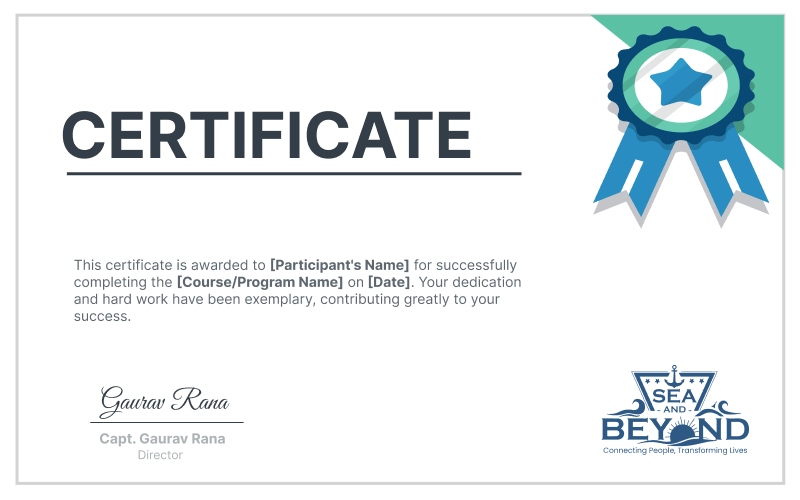
Successful completion of this course will earn you a certificate of completion from Sea and Beyond. This certificate will be emailed to you and you could also share and show it on LinkedIn Please click on the button below to purchase the certificate.
Similar Courses






Reviews...
Yogesh Thakkar On Nov 10th 2025
Good explanation....
Yogesh Thakkar On Jan 7th 2026
Very well explained in de....