
Merchant Navy Ranks Explained - Deck To Captain
 Sea and Beyond
23 Oct 2026
178 view
0
0 Comment
If you are researching a career in the Merchant Navy, one of the first questions you will have is: what are the Merchant Navy ranks?
The answer is easier when you divide a ship into departments. On many merchant ships, the main working groups are the deck department, engine department and steward or catering department. The exact crew structure can change with the vessel, company, flag, trade and ship size.
The deck side is responsible for navigation, cargo operations, watchkeeping, safety and many external operations. The engine department looks after propulsion, generators and machinery. The steward or catering side supports food, accommodation and related services where those roles are carried on the vessel.
DG Shipping's seafaring-career guidance shows a basic onboard structure with Master at the top and separate deck, engine and steward departments underneath.
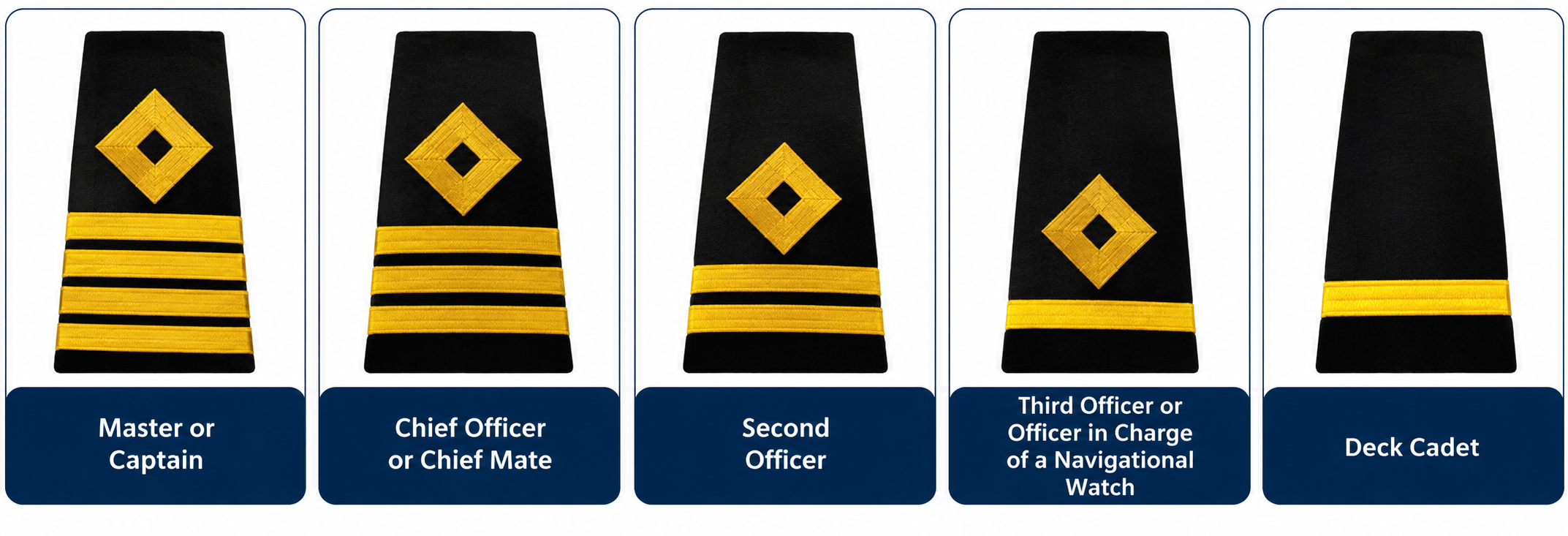
Merchant Navy Ranks Chart: Deck Department
| Rank | Simple role | Typical career position |
| Master / Captain | Overall command of the ship | Highest deck command |
| Chief Officer / Chief Mate | Senior deck officer and key operational manager | Second in command |
| Second Officer | Navigation and watchkeeping responsibilities | Navigational officer |
| Third Officer / OOW | Watchkeeping, safety and operational duties | Junior deck officer |
| Deck Cadet | Trainee learning deck operations and watchkeeping | Entry-level officer trainee |
| Bosun / Boatswain | Senior deck rating coordinates deck work | Senior rating |
| Deck Ratings | Support deck maintenance, mooring, cargo and other assigned work | Skilled crew |
This is a simplified career map. Rank names and manning arrangements can differ by vessel and certificate. DG Shipping's current advisory lists Master, Chief Officer, Second Officer, watchkeeping deck officer or Third Officer, cadet, Bosun and deck ratings within its onboard-ranks framework.
1. Master or Captain
The Master is the senior person in command of the ship. In everyday language, people often call the Master the Captain.
The Master has overall responsibility for the safe operation of the vessel, crew, cargo and voyage within the applicable laws, company procedures and international requirements.
The Master does not personally perform every task on the ship. Instead, the Master leads the team, makes or oversees important decisions, coordinates with shore management and takes command during critical situations.
Because of the level of responsibility, becoming Master requires substantial sea service, approved training, examinations and the appropriate certificate of competency.
For students, this is important: Captain is a senior professional rank reached after years of progression. It is not an entry-level job.
2. Chief Officer or Chief Mate
The Chief Officer is the senior deck officer after the Master. The Chief Officer has major responsibility for deck operations and is commonly responsible for cargo work, deck maintenance, safety-related duties and supervision of deck personnel.
The exact division of responsibilities varies by ship and company. On a large cargo ship, cargo planning and operations can be a major part of the Chief Officer's work.
The Chief Officer also needs to be ready to take command when required. This is why the rank requires strong technical knowledge, leadership and practical experience.
3. Second Officer
The Second Officer is a deck officer who normally has important navigation and watchkeeping duties. On many ships, the Second Officer is closely involved with voyage planning, navigation equipment and navigational watchkeeping.
The exact duties depend on the ship and company. Modern navigation uses electronic systems, charts, communications equipment and other technology, so officers need both practical shipboard skills and technical knowledge.
The International Maritime Organization's STCW framework sets international standards for seafarer training, certification and watchkeeping.
4. Third Officer or Officer in Charge of a Navigational Watch
The Third Officer is commonly a junior deck officer who stands navigational watch and handles assigned safety and operational responsibilities.
The rank may be described using terminology such as Officer in Charge of a Navigational Watch. Exact titles and certificate wording can vary with the applicable certification system and vessel.
A Third Officer needs to be able to perform the responsibilities of a watchkeeping officer safely. Maritime English is also important because IMO standard marine communication phrases are used to reduce misunderstandings during routine and emergency communication.
5. Deck Cadet
A Deck Cadet is a trainee working toward an officer career. The cadet learns how the deck department works under the supervision of qualified officers.
Cadet training can include bridge watchkeeping, navigation-related tasks, safety drills, maintenance, cargo operations and completion of the required training record or practical experience.
This stage is important because classroom learning must be connected to real shipboard work. The officer career is not built from classroom study alone.
6. Bosun or Boatswain
The Bosun is a senior deck rating who helps organise and supervise deck ratings and routine deck work.
Typical work can involve maintenance, mooring operations, deck equipment, cleaning, painting, stores and other practical tasks assigned by deck officers.
The Bosun is experienced in practical deck work and often acts as an important link between deck officers and ratings.
7. Deck Ratings
Deck ratings are skilled crew members who support the deck department. Their duties can include mooring, maintenance, lookout duties where assigned, cargo support and other deck operations.
Entry-level ratings may start as trainees and progress as they gain experience, training and required certification.
DG Shipping's current published rank data includes categories such as Deck Rating, Trainee Deck Rating, Deck Petty Officer, Deck Watchkeeping Rating and Ordinary Seaman.
The exact route from rating to officer is not automatic. A person who wants to become an officer must meet the separate education, training, sea-service and certification requirements for the officer route.
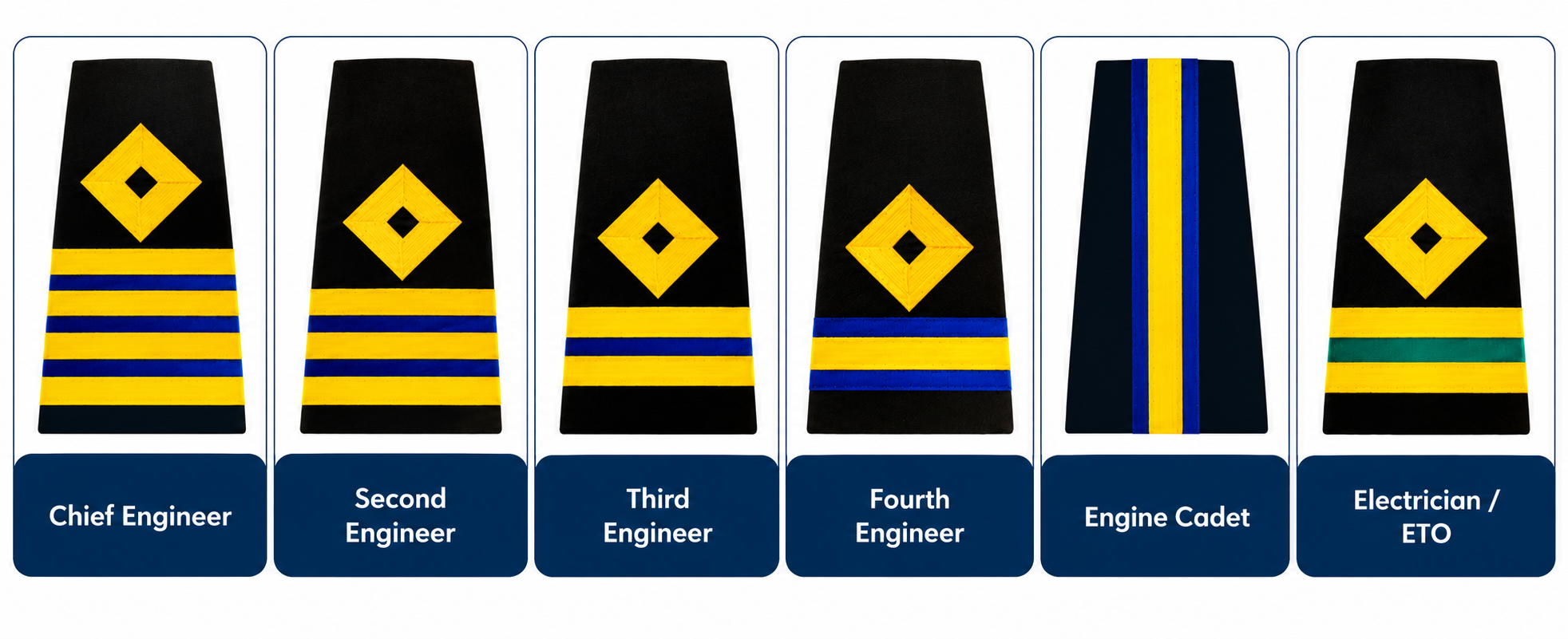
Merchant Navy Engine Department Ranks
The engine department has its own career ladder. The names are different from deck ranks because the work is focused on propulsion and machinery.
| Rank | Simple role | Career level |
| Chief Engineer | Overall responsibility for the engine department | Higher engineering rank |
| Second Engineer | Senior engineer responsible for major engine-room operations and maintenance | Senior engineer |
| Third Engineer | Engineering watchkeeping and assigned machinery duties | Junior / mid-level engineer |
| Fourth Engineer | Junior engineering officer with assigned machinery responsibilities | Junior engineer |
| Engine Cadet | Trainee engineering officer | Entry-level trainee |
| Engine Rating | Supports engineers with machinery and maintenance work | Skilled rating |
| Electrician / ETO | Electrical and electronic systems | Specialised technical role |
DG Shipping's onboard-ranks advisory separately lists Chief Engineer, Second Engineer, Third Engineer, Electrician and Engine Ratings under the engine department.
Merchant Navy Officer Ranks vs Ratings
This distinction is important for students choosing a course.
Officers normally hold the competency certification required for officer duties and take higher levels of responsibility for navigation, engineering, safety or management. Ratings support shipboard operations within their training and assigned duties.
| Officers | Ratings | Simple difference |
| Master, Chief Officer, Second Officer, Third Officer | Bosun, deck ratings | Officers have higher operational and managment responsibility |
| Chief Engineer, Second Engineer, Third Engineer, Fourth Engineer | Engine ratings | Engine officers manage engineering duties while ratings provide practical support |
| Deck Cadet / Engine Cadet | Trainee ratings | Cadets are officer trainees; trainee ratings follow a different route |
The exact manning and job titles depend on the ship and applicable regulations. Students should therefore use the rank chart as a career guide rather than a promise that every vessel will have exactly the same crew.
Merchant Navy Highest Post: Is Captain the Highest?
For the deck department, the Master is the highest onboard command rank. This is why many people search for “Merchant Navy Highest Post” and the short answer is Captain or Master.
But there is an important distinction. The Chief Engineer is the senior officer responsible for the engine department. The Master has overall command of the ship while the Chief Engineer has overall responsibility for the engineering department.
So it is not accurate to say that every person on a ship reports to the Captain in the same operational way. The ship is organised into departments and responsibilities are defined by rank, certification, company procedures and maritime law.
Merchant Navy Posts: What Are the Main Posts?
If you search “Merchant Navy Posts” or “Merchant Navy Post”, you will find many titles. The easiest way to understand them is by department.
- Deck: Master, Chief Officer, Second Officer, Third Officer, Deck Cadet, Bosun and deck ratings.
- Engine: Chief Engineer, Second Engineer, Third Engineer, Fourth Engineer, Engine Cadet and engine ratings.
- Electrical: Electro-Technical Officer and other electrical or electronic roles where applicable.
- Catering or hospitality: Chief Steward, cook and other hospitality roles depending on vessel type.
- Specialist roles: Medical officers, radio-related roles and other positions may exist depending on the vessel and operation.
DG Shipping's published rank statistics show a broad range of officer and rating categories beyond the most commonly discussed deck ranks.
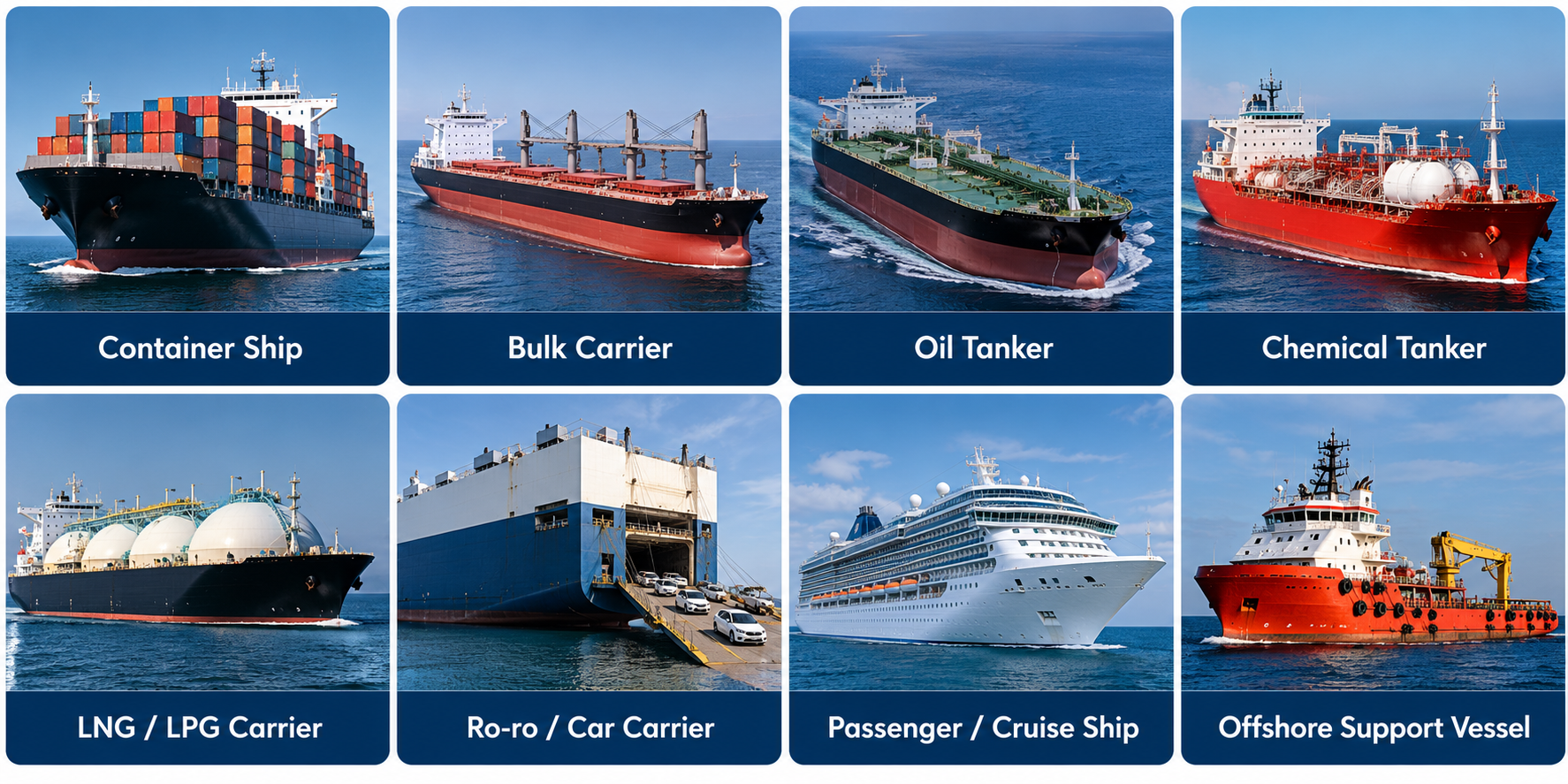
Types of Ships in Merchant Navy
Merchant Navy ranks make more sense when you understand the ships on which people work. Different vessels need different skills and operational knowledge.
| Ship type | What is carries or does | Examples of specialist work |
| Container ship | Container and packaged cargo | Cargo planning, container operations, navigation |
| Bulk carrier | Dry bulk cargo such as grain or ore | Bulk cargo handling and hold operations |
| Oil tanker | Liquid petroleum cargo | Tank and cargo safety, specialised tanker operations |
| Chemical tanker | Chemical liquid cargo | Specialised cargo handling and safety |
| LNG / LPG carrier | Liquified gas cargo | Specialised cargo systems and safety |
| Ro-ro / car carrier | Vehicles and wheeled cargo | Vehicle deck and cargo operations |
| Passenger / cruise ship | Passengers and hospitality services | Passenger safety, hotel and marine operations |
| Offshore support vessel | Offshore industry support | Specialised offshore operations |
The rank structure can look similar across ship types but the required training, endorsements and operational experience can be different. For example, certain tanker and passenger-ship operations require additional specialised training under the applicable rules.
Merchant Navy Rank Promotion: How Does Career Growth Work?
Promotion is not simply based on how many years you have worked. For officer careers, progression normally depends on approved education and training, sea service, examinations, competency certification, medical fitness and the requirements of the position.
A simplified deck officer path looks like this:
- Maritime education and approved pre-sea training
- Deck Cadet
- Required sea service and training
- Officer of the Watch / Third Officer level
- Further sea service and certification
- Second Officer
- Further sea service and certification
- Chief Officer
- Further command-level certification and experience
- Master / Captain
The engine side follows a similar principle, with engineering education and training leading to cadetship, junior engineering officer roles and eventually senior ranks such as Second Engineer and Chief Engineer.
IMO's STCW Convention sets international standards for training, certification and watchkeeping, while national maritime administrations implement and administer those requirements.
Can a Deck Rating Become a Merchant Navy Officer?
It can be possible for an experienced rating to move toward an officer career, but it is not an automatic promotion.
The person must meet the education, training, sea-service and certification requirements for the officer pathway. The exact route depends on the qualification and applicable Indian rules.
This matters when choosing a course. If your long-term goal is to become a Captain, compare the officer-entry route with the rating route before you enrol.
A rating route can be a valid maritime career, but students should not assume that every rating course automatically converts into a deck officer career.
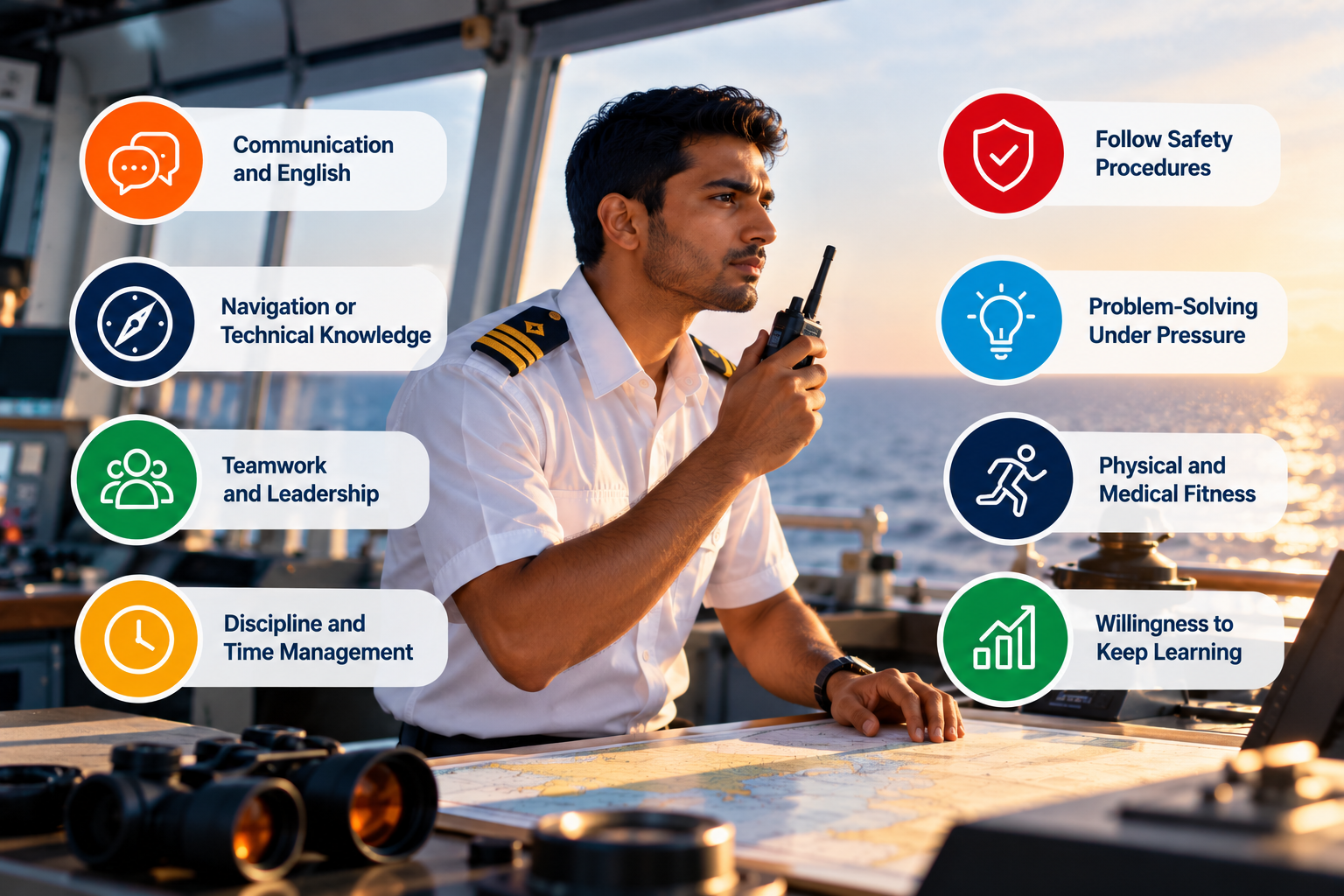
Merchant Navy Officer: What Skills Are Needed?
- Good communication and practical English
- Navigation or technical knowledge depending on department
- Teamwork and leadership
- Discipline and time management
- Ability to follow safety procedures
- Problem-solving under pressure
- Physical and medical fitness for the role
- Willingness to keep learning and complete further certification
Communication is particularly important at sea. IMO's Standard Marine Communication Phrases were developed to reduce language barriers and misunderstandings during routine and emergency shipboard communication.
Do Merchant Navy Ranks Decide Salary?
Rank is an important factor in pay, but it is not the only factor.
Salary can vary by company, vessel type, flag, contract, rank, experience and specialised certification. A Master on one contract may have a different package from a Master on another vessel or with another company.
The same applies to ratings and junior officers. A salary figure without rank, vessel type, contract and experience can give students the wrong picture.
When comparing a Merchant Navy career, look at total contract terms rather than only the headline salary.
Merchant Navy Ranks and Career Choice: Which Path Is Right for You?
If you enjoy navigation, geography, bridge operations and leadership, the deck officer path may interest you.
If you enjoy physics, machines, engines, electrical systems and troubleshooting, the engine or electrical route may suit you better.
If you want to enter through a rating route, focus on practical shipboard work and understand how the qualification can develop over time.
There is no single “best” rank for every student. The right choice depends on your education, interests, medical fitness, financial situation and willingness to spend extended periods at sea.
Common Mistakes Students Make About Merchant Navy Ranks
- Thinking Captain is an entry-level Merchant Navy job.
- Assuming every ship has exactly the same ranks and crew size.
- Confusing deck officers with engine officers.
- Assuming a rating automatically becomes an officer.
- Choosing a course only because it advertises a future Captain salary.
- Not checking the current approved training and certification route.
- Thinking rank alone guarantees a particular salary.
- Ignoring medical fitness and sea-service requirements.
Frequently Asked Questions
What are Merchant Navy ranks?
Merchant Navy ranks are the positions held by officers and ratings on commercial ships. Common deck ranks include Master, Chief Officer, Second Officer, Third Officer and Deck Cadet.
What is the highest post in Merchant Navy?
For overall command on a merchant ship, the Master or Captain is the highest deck command rank. The Chief Engineer is the senior officer responsible for the engine department.
What are Merchant Navy Officer Ranks?
Common deck officer ranks are Master, Chief Officer, Second Officer and Third Officer. Engineering officer ranks commonly include Chief Engineer, Second Engineer, Third Engineer and Fourth Engineer.
What is a Deck Rating in Merchant Navy?
A deck rating is a trained crew member who supports deck operations such as maintenance, mooring, cargo work and other assigned duties.
Can a rating become a Captain?
A rating may be able to move toward the officer pathway if they meet the required education, training, sea service and certification requirements. It is not an automatic promotion.
What is a Merchant Navy Officer?
A Merchant Navy officer is a qualified shipboard professional with responsibility for areas such as navigation, engineering, safety or other operational duties depending on rank.
What are the main Merchant Navy posts?
Main posts include deck officers, engine officers, ratings, electrical roles, catering or hospitality roles and specialist positions depending on the ship.
Do all ships have the same ranks?
No. Manning depends on ship type, size, operation, company and applicable regulations.
Which is higher, Chief Officer or Second Officer?
Chief Officer is senior to Second Officer in the deck department.
Which is higher, Chief Engineer or Second Engineer?
Chief Engineer is senior to Second Engineer in the engine department.
Does rank decide salary?
Rank is an important factor but salary also depends on company, vessel, contract, experience, certification and other conditions.
What should I study to become a Captain?
The exact route depends on the country and current rules. In India, students need an approved officer-training pathway followed by sea service, examinations and the required certificates of competency.



Sea and Beyond
At Sea and Beyond we strive for authenticity and honesty in our work. Our mission is to help “You take a well informed decision” and we try and support you through our various services like
- Mentoring
- Skill enhancement/Education
- Job Opportunities and
- Your branding (CV and LinkedIn preparation)
We have a team of writers who conduct thorough research to ensure the accuracy of the content and for the clarity in communication. We will be happy to support you wherever required
Leave a comment
View more
Give your career a boost with S&B professional services.
CV Prep/Evaluation Prep Service
SeaCommerce
Shop maritime books & essentials
DG Medical Examiners
Find approved doctors near you
Tools & Calculators
Free maritime tools for seafarers
More Jobs
Ship management
Singapore
HR - People & Culture Advi..
Ship management
Mumbai
Marine Quality Assurance S..
Ship management
Mumbai
IT Infrastructure and Gove..
Interview Prep/Mentoring
Find your polestar with the host of experts available on our platform
Know more