
What Is Merchant Navy - Beginner's Guide
 Sea and Beyond
20 Oct 2026
265 view
0
0 Comment
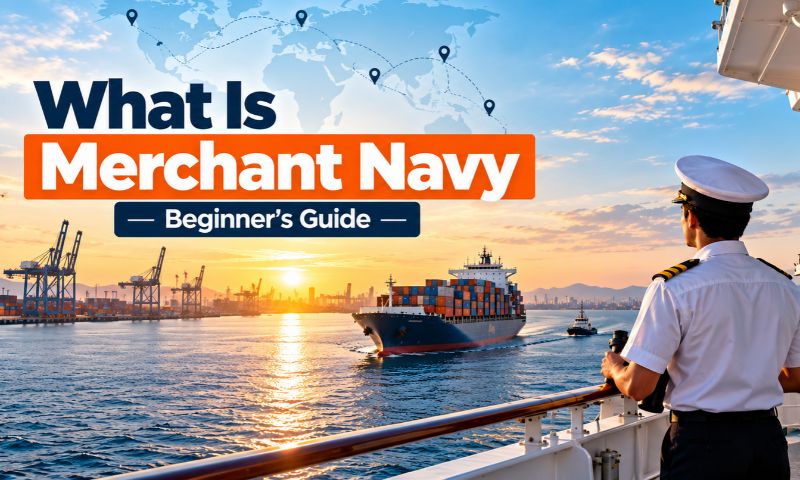
The Merchant Navy is the part of the maritime industry that operates commercial ships. These ships carry cargo, fuel, vehicles, containers and passengers from one port to another.
In simple words, the Merchant Navy helps move goods by sea. A large part of international trade depends on ships, so the people who operate and maintain those ships have an important job.
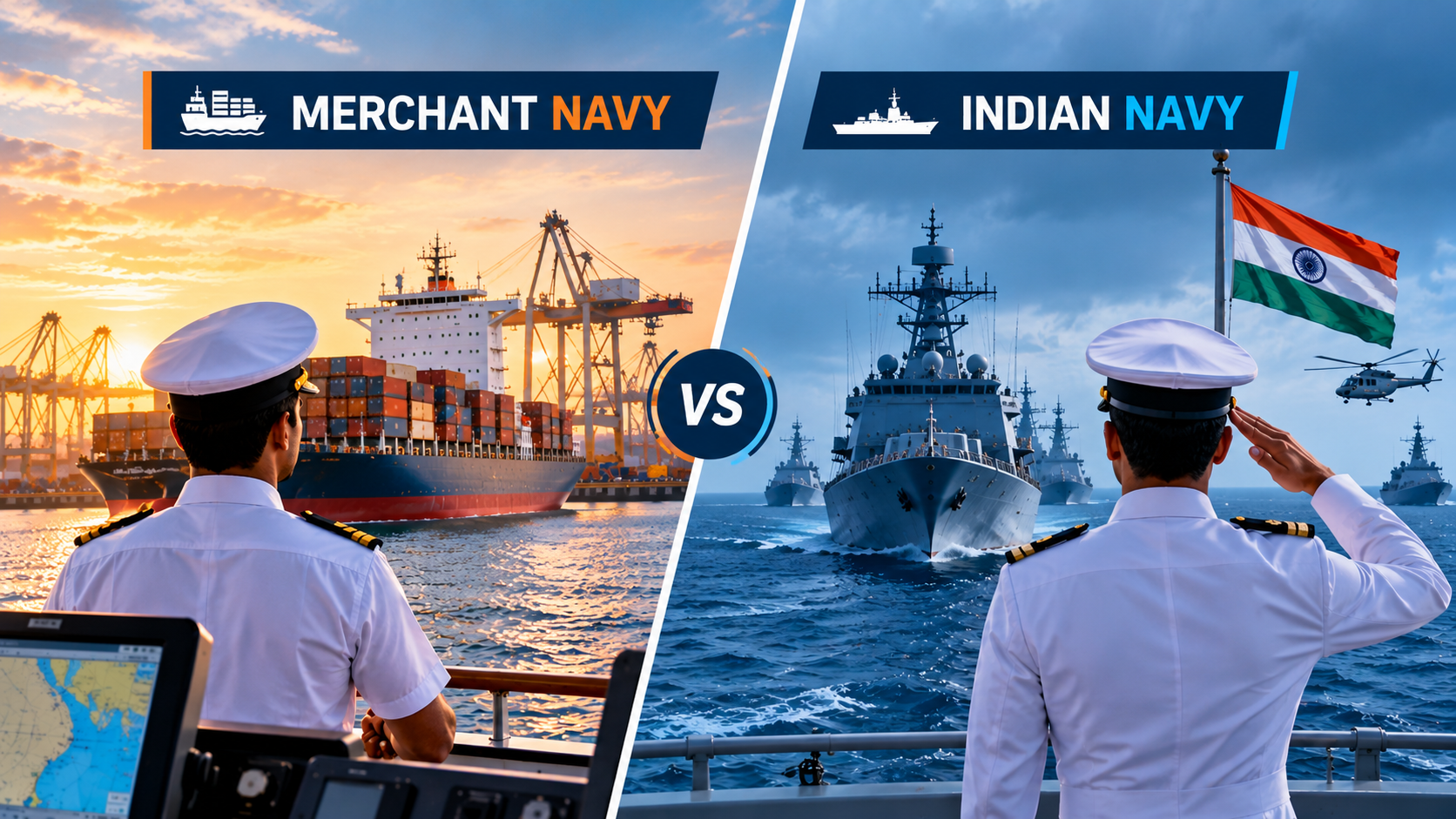
The Merchant Navy is not the same as the Indian Navy. The Indian Navy is a military force responsible for national defence and maritime security. The Merchant Navy is mainly a commercial industry that transports goods and passengers.
If you are a student searching “What Is Merchant Navy?” because you are thinking about a career at sea, the first thing to understand is that Merchant Navy is not one single job. It includes different departments, ranks and career paths.
Merchant Navy Meaning
Merchant Navy Meaning is simple: a group of commercial shipping professionals who work on merchant or commercial vessels.
The word “merchant” refers to trade and commerce. Ships operated by shipping companies carry goods between ports and countries. The crew on these ships makes that movement possible.
You may also see searches such as “Merchant Navy Kya Hota Hai”, “Merchant Navy Kya Hai” or “Merchant Navy Kya Hai”. All of these questions are asking roughly the same thing: what is this career and what do people actually do?
The answer is broader than “working on a ship”. A seafarer can work in navigation, marine engineering, electrical systems, deck operations, cargo operations, catering or other specialised roles depending on the vessel and qualification.

What Does Merchant Navy Do?
The Merchant Navy transports goods and passengers safely and efficiently by sea. Different ships are designed for different types of cargo.
- Container ships carry containers filled with manufactured goods and other products.
- Bulk carriers carry cargo such as grain, coal, ore and other dry bulk materials.
- Oil and chemical tankers carry liquid cargo.
- LNG and LPG carriers transport liquefied gases.
- Ro-ro ships carry vehicles and wheeled cargo.
- Passenger and cruise ships carry people and provide accommodation and services.
The crew does much more than simply travel from one country to another. They operate the ship, maintain machinery, navigate, handle cargo, follow safety procedures, respond to emergencies and keep records required by maritime regulations.
Under India's Merchant Shipping Act, seafarers must have the training, certification or other qualifications required for their duties. The shipowner must also ensure that seafarers are trained or certified as competent and have completed required personal-safety training.
What Does a Merchant Navy Officer Do?
Officer jobs normally involve higher levels of responsibility and require formal maritime education, sea time, examinations and certification.
There are two major operational areas that beginners should understand: the deck department and the engine department.
Deck Department
The deck team is responsible for navigation, watchkeeping, cargo operations, safety and many operational activities on board. A typical career can progress from cadet to junior officer and then to senior ranks such as Chief Officer and Master, depending on the person's training, sea service and certificates.
Engine Department
The engine team looks after the ship's main engine, generators, pumps, fuel systems, machinery and other technical equipment. A marine engineer can progress through engineering ranks after completing the required education, sea time, courses and examinations.
What Are Rating Jobs in Merchant Navy?
Not every seafarer joins as an officer. Ratings are skilled crew members who support deck, engine or other shipboard operations according to their training and assigned duties.
For example, a deck rating may support mooring, maintenance, cargo work and watchkeeping duties. Engine ratings may support engineers with machinery, maintenance and engine-room operations.
DG Shipping has published eligibility information for pre-sea maritime rating courses. One example is the six-month General Purpose Rating route, where the published eligibility included Class 10 with Science and Mathematics, minimum marks requirements and English requirements, subject to the applicable rules and current course approval.
Eligibility changes can occur, so students should always check the current approved course and eligibility criteria before admission.
Merchant Navy Career Options in India
The right career path depends on your education, interests, medical fitness and long-term goals.
| Career Path | Typical Entry Route | Main Work | Long-Term Direction |
| Deck Officer | 12th PCM + approved maritime education/training | Navigation, cargo, safety, ship operations | Chief Officer/ Master |
| Marine Engineer | 12th PCM or relevant engineering route + approved training | Engines, machinery and technical systems | Senior Engineer/ Chief Engineer |
| Electrical / ETO | Approved electrical/ electronics maritime route | Electrical and electronic systems | Senior ETO roles |
| Deck Rating | Approved rating training route | Deck operations, maintenance and support | Higher rating roles/ further certification |
| Engine Rating | Approved rating training route | Engine-room support and maintenance | Higher rating roles/ further certifications |
| Cruise Hospitality | Approved route depending on role | Guest service, food, housekeeping and hotel operations | Supervisory and management roles |
How to Join Merchant Navy After 10th
Students who have completed Class 10 can have rating-level entry options, depending on the current approved training routes and eligibility requirements.
A common mistake is to choose a course only because an advertisement says “Merchant Navy after 10th”. The actual course approval, eligibility, medical standards, training duration and employment pathway should be checked before paying fees.
DG Shipping has published rating-course eligibility information and approved training institute details. Current requirements should be checked on the official maritime administration website before admission.
How to Join Merchant Navy After 12th
Class 12 students can consider officer-level maritime education if they meet the current academic, medical and other requirements.
Older DG Shipping guidance for officer entry describes routes such as BSc Nautical Science, Diploma in Nautical Science and Marine Engineering. It also shows the general progression from classroom training to onboard training and then government examinations and certificates of competency.
Because admission rules and course structures can change, do not treat an old brochure as the final eligibility source. Check the latest approved institute and programme information before applying.
What Qualifications Are Needed for Merchant Navy?
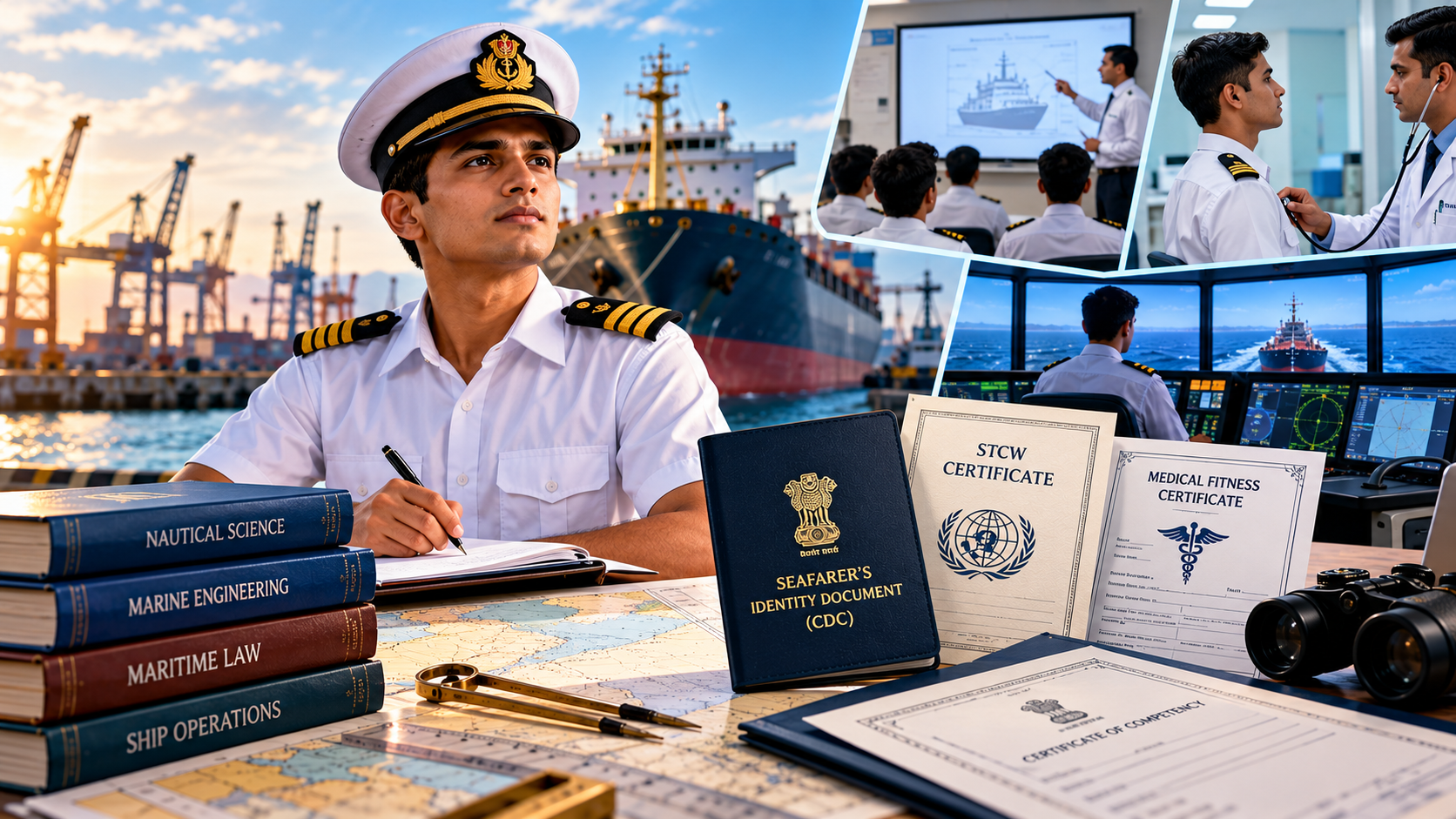
There is no single qualification for every Merchant Navy job. Requirements depend on the rank and department.
- Academic qualification appropriate for the chosen course.
- Medical fitness under the applicable maritime standards.
- Required maritime training from an approved training institute.
- STCW safety and other required certificates.
- Seafarer documentation such as CDC where applicable.
- Required sea service and examinations for higher certificates and ranks.
India's maritime training and certification system is regulated by the maritime administration and is aligned with international STCW requirements. DGMA states that India's nautical examination and certification system is governed by the STCW framework and that India is on the IMO White List.
Merchant Navy Medical Requirements
Medical fitness is one of the most important parts of a seafaring career. A person may be academically eligible for a course but still not be medically fit for sea service.
Medical standards can cover eyesight, colour vision, hearing, general health and other conditions relevant to safe work on board. The exact standard depends on the role and applicable maritime rules.
Do the medical assessment through the approved maritime medical process before spending a large amount on training. This can prevent a situation where a student pays for a course and later discovers a medical restriction.
Is Merchant Navy a Good Career?
For the right person, it can be a strong career. But it is not suitable for everyone.
The attraction is clear: international exposure, specialised skills, structured career progression and the possibility of good income as qualifications and experience grow.
The difficult side is equally real. You may spend months away from home. Work can be physically and mentally demanding. Ships operate around the clock, so watchkeeping and shift work are normal. Weather, emergencies and long periods at sea require discipline.
A student should choose Merchant Navy because they understand the work, not simply because they saw a salary advertisement.

Merchant Navy Salary in India
There is no single Merchant Navy salary. Pay depends on rank, vessel type, company, flag, contract, experience, certification and the nature of the assignment.
A trainee or cadet will not normally earn the same amount as an experienced officer. Similarly, senior officers and specialised crew can have very different compensation from entry-level ratings.
Be careful with websites that publish one fixed salary figure and present it as guaranteed. A salary range without rank, vessel type and experience can be misleading.
Before accepting an offer, check the contract, employer, position, salary currency, payment terms, leave arrangement, contract length and any deductions.
Is Merchant Navy Dangerous?
Working at sea involves real risks. Ships operate in changing weather, machinery spaces, cargo areas and sometimes difficult security environments.
That is why maritime safety training is taken seriously. Seafarers are trained for fire, abandon-ship, personal safety, emergency response and other situations. Ships also operate under international and national safety requirements.
The existence of risk does not mean that every voyage is unsafe. Professional shipping is highly regulated and safety procedures are a central part of shipboard operations.
Students should ask training institutes and employers about safety culture, emergency training, medical support and welfare arrangements instead of focusing only on salary.
Merchant Navy vs Indian Navy
| Point | Merchant Navy | Indian Navy |
| Main Purpose | Commercial Shipping and transport | Defence and national security |
| Employer | Shipping companies / commercial operators | Government / armed forces |
| Main Work | Cargo, passengers, ship operations and maintenance | Military operations and defence |
| Career Type | Civilian maritime career | Military career |
| Uniform / Service structure | Depends on company and role | Military structure and rank system |
The two careers are both maritime but they are fundamentally different. Choosing one should depend on whether you want a commercial seafaring career or a military career.
Merchant Navy Documents You Should Know
- CDC: Continuous Discharge Certificate, an important seafarer document.
- SID: Seafarer Identity Document, a separate biometric identity document.
- INDoS: Indian National Database of Seafarers identifier.
- Passport: Indian identity and international travel document.
- STCW certificates: Required maritime training and safety certification depending on the role.
- CoC / CoP: Competency or proficiency certification required for relevant positions.
These documents do different jobs. Having one document does not automatically replace another.
How to Choose a Merchant Navy Training Institute
This is one of the most important decisions for a beginner.
- Check whether the institute and course are approved by the Indian maritime authority.
- Confirm the exact course name and eligibility before paying.
- Ask for the complete fee structure in writing.
- Ask what documents and medical requirements apply.
- Check whether the course leads to the career route you actually want.
- Do not believe claims of guaranteed jobs without checking the employer and recruitment arrangement.
- Keep copies of receipts, admission documents and certificates.
DG Shipping has warned against maritime training in India by foreign maritime administrations or entities without prior approval. The Directorate also stresses that Indian maritime training must meet national and international standards.
Merchant Navy Recruitment: Avoid Job Scams
Recruitment is an area where students and parents need extra caution.
Under the Merchant Shipping Act, seafarers are to be engaged through licensed recruitment and placement services or by owners in the circumstances allowed by law. The Act also restricts charging seafarers recruitment or placement fees, while allowing certain personal document costs such as medical certificates, CDC, identity documents and passports to be borne by the seafarer.
A guaranteed job, guaranteed salary or guaranteed foreign placement should make you cautious. Verify the company and recruitment route before paying money or handing over original documents.
What Is Life Like on a Merchant Ship?
Life on board is structured. You work according to a duty or watch schedule, eat and live on the vessel and follow safety and security procedures.
Your free time can depend on the vessel, department, workload and port schedule. Some voyages may be busy while others can have different routines.
You also live with people from different regions and countries. Good communication, teamwork and discipline matter as much as technical skill.
Being comfortable with long periods away from home is an important part of deciding whether this career suits you.
Pros and Cons of Merchant Navy
| Advantages | Challenges |
| International Exposure | Long periods away from family |
| Specialised professional skills | Shift and watchkeeping duties |
| Clear progression for qualified seafarers | Physically and mentally deemanding work |
| Potential for strong earnings with rank and experience | Time at sea can be challenging |
| Different vessel and career options | Strict medical and certification requirements |
| Experience that can build a strong long-term maritime career | Employment depends on qualifications and market conditions |
Who Should Consider Merchant Navy?
Merchant Navy can suit students who are disciplined, physically fit for the applicable role, comfortable with technical or operational work and prepared to spend extended periods away from home.
It may not suit someone who strongly dislikes being away from family, cannot accept shift work or is choosing the career only because of salary claims.
Talk to experienced seafarers, visit approved training institutes and understand the actual course and job route before making a decision.
Frequently Asked Questions
What is Merchant Navy?
The Merchant Navy is the commercial shipping sector that operates ships carrying cargo or passengers. It includes officers, ratings and other maritime professionals.
What is Merchant Navy Meaning?
Merchant Navy Meaning refers to the commercial maritime workforce and shipping operations that transport goods and passengers by sea.
Merchant Navy Kya Hota Hai?
Merchant Navy ek commercial shipping career hai jisme seafarers cargo ya passenger ships par navigation, engineering, safety, maintenance aur other shipboard duties karte hain.
What Does Merchant Navy Do?
It operates commercial vessels that transport cargo, fuel, vehicles and passengers between ports.
Is Merchant Navy the Indian Navy?
No. Indian Navy is a military organisation. Merchant Navy is primarily a commercial shipping industry.
Can I join Merchant Navy after 10th?
Yes, certain approved rating-level training routes are available subject to current eligibility and medical requirements.
Can I join Merchant Navy after 12th?
Yes. Students who meet the current requirements can consider officer-level nautical or marine engineering routes.
Is Merchant Navy a government job?
Not usually. Most seafarers work for commercial shipping companies or related maritime employers. The maritime administration regulates training, certification and shipping activities.
Is Merchant Navy a good career?
It can be a good career for someone who understands the work and lifestyle. It should not be chosen only because of salary claims.
Does Merchant Navy guarantee a high salary?
No. Pay varies by rank, vessel, company, contract, certification and experience.
Is Merchant Navy dangerous?
Sea work has real risks but ships operate under extensive safety rules and seafarers receive safety and emergency training.
What documents are needed?
Depending on the role, you may need a passport, CDC, SID, INDoS record, medical certificate, STCW certificates and competency or proficiency documents.
Conclusion
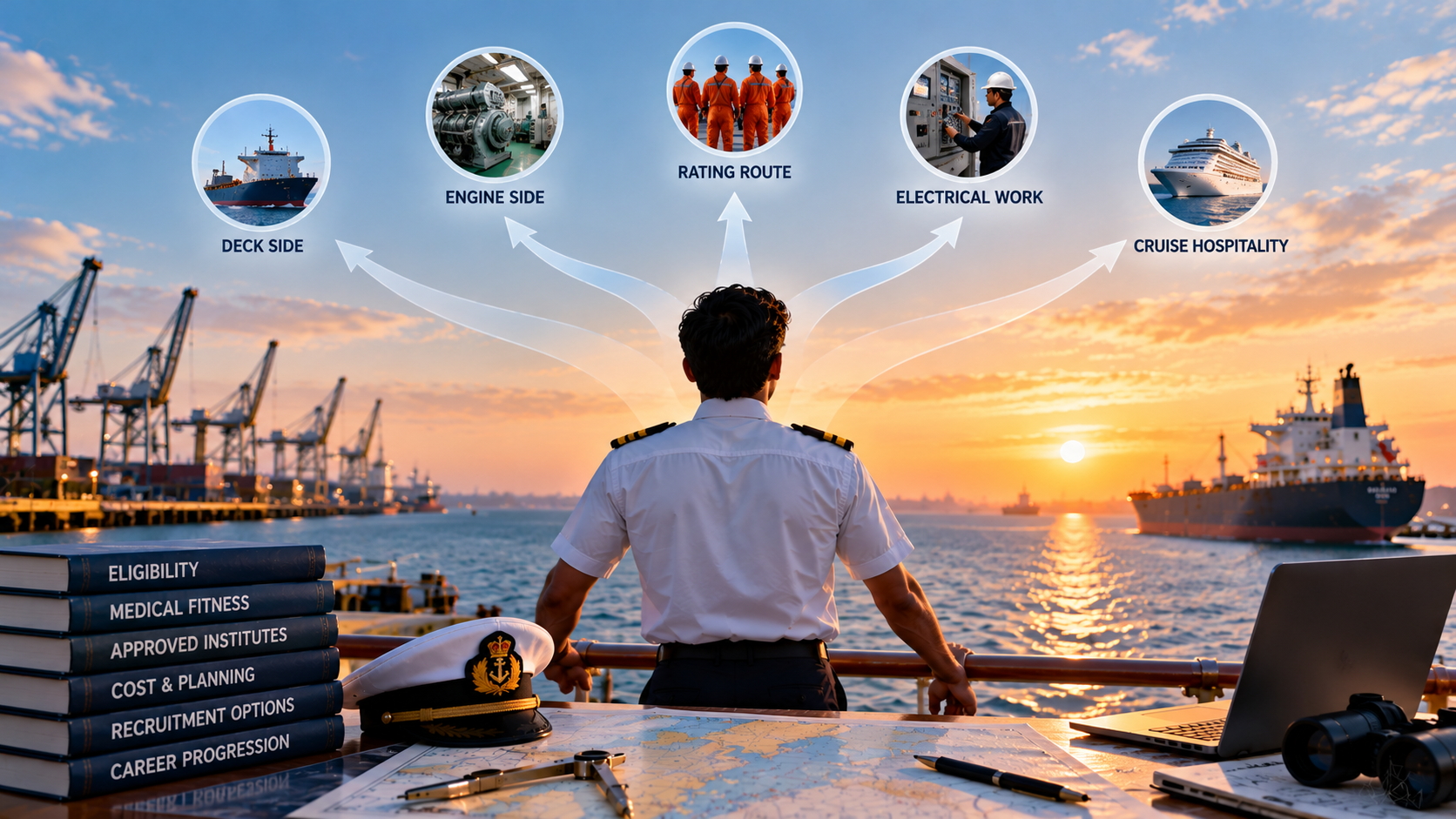
If you are just starting your research, do not rush into admission. First decide whether you want the deck side, engine side, rating route, electrical work or cruise hospitality.
Then check the exact eligibility for that route, confirm your medical fitness, shortlist approved institutes and understand the complete cost. After that, look at recruitment options and career progression.
The Merchant Navy can offer a serious professional career, but it is not a shortcut to quick money. The people who do well usually treat it as a long-term profession and keep upgrading their skills and certificates.



Sea and Beyond
At Sea and Beyond we strive for authenticity and honesty in our work. Our mission is to help “You take a well informed decision” and we try and support you through our various services like
- Mentoring
- Skill enhancement/Education
- Job Opportunities and
- Your branding (CV and LinkedIn preparation)
We have a team of writers who conduct thorough research to ensure the accuracy of the content and for the clarity in communication. We will be happy to support you wherever required
Leave a comment
View more
Give your career a boost with S&B professional services.
CV Prep/Evaluation Prep Service
SeaCommerce
Shop maritime books & essentials
DG Medical Examiners
Find approved doctors near you
Tools & Calculators
Free maritime tools for seafarers
More Jobs
Ship management
Singapore
HR - People & Culture Advi..
Ship management
Mumbai
Marine Quality Assurance S..
Ship management
Mumbai
IT Infrastructure and Gove..
Interview Prep/Mentoring
Find your polestar with the host of experts available on our platform
Know more