
Q&A Part A: Exam Preparation - Past Paper Solving and Answer Writing Guidance
This chapter focuses on developing candidates’ exam writing skills through detailed solutions to past ICS examination questions. It includes guidance on answering theoretical and analytical questions such as:
- Derived demand in shipping
- Freight rate equilibrium determination
- Barriers to entry in liner shipping
- Absolute advantage and cost theory
- Port ownership models and their economic implications
Candidates will learn how to structure answers clearly, use diagrams effectively, and present analytical responses expected in ICS exams.
Key learning outcome: Build confidence and competence in answering ICS exam questions effectively.
Q&A Part B: Advanced Exam Preparation and Applied Question Solving
This chapter provides additional exam preparation through recent question paper discussions and applied economic analysis. Topics include:
- Price discrimination in liner shipping
- Supply and demand models applied to ship management
- Break-even freight rate calculations
- Elasticity of supply in shipping
- Lay-up decision economics
- Trade protectionism and its impact on shipping and global trade
This chapter helps candidates apply theoretical knowledge to real exam scenarios and develop strong analytical writing skills.
Key learning outcome: Master exam-oriented thinking and practical application of shipping economics.

Capt. Abhishek Nair
Capt. Abhishek Nair is a maritime and ports technology leader with over 20 years of experience across command at sea, chartering, port operations, and digital transformation in the global shipping industry. He holds a Master’s degree in Maritime Economics & Logistics from Erasmus School of Economics, Rotterdam, and is a published author focused on future fuels and decarbonization. He is a Fellow of the Institute of Chartered Shipbrokers and an Associate Fellow of The Nautical Institute. His interests and focus lie in the future of shipping, chartering, port operations, and the integration of emerging technologies to drive decarbonization and operational excellence. He has spearheaded digital transformation projects in key global hubs that delivered measurable efficiency gains and lasting positive change. He takes an active interest in mentoring junior professionals, sharing insights and learnings from his own career to guide emerging talent in the maritime sector. His teaching approach is structured, engaging, and grounded in years of problemsolving at sea and ashore—designed to prepare students not just for exams, but for impactful careers in the industry.
Rating:
Price:
₹ 1999
Language:
English
Length:
02:00:00
Intended for:
Reference:
Topics:
2 Sections . 6 lectures . 2h 31m total length
27 min
1.1 Nov 2024 paper solving
Answers writing guidance, Nov 2024 paper solving
Que 1: Compare & contrast advantages of private and public port ownership
Que 2: Explain a) theory of Absolute advantage, b) Long run cost
Que 3: Explain the term Derived demand in the context of shipping (detailed explanation)

36 min
1.2 Equilibrium Freight rate and concept of utility in shipping industry
Que 4:Explain how the “Equilibrium Freight rate” is determined.
Que 5: Explain the concept of “utility” as it applied to the shipping industry
28 min
1.3 Liner Trade, economic impacts of Tariffs, Bulk cargo market analysis
Que 6: Discuss barriers to entry which may occur in the liner trades.
Que 7: Examine the economic impacts of Tariffs, using a graph to support your answer.
Que 8: Bulk cargo market analysis for Iron Ore//Grain//Thermal Coal//Bauxite
26 min
2.1 May 2025 paper solving
Answers writing guidance,May 2025 paper solving
Que 1- Discuss about trade protections like Tariffs influence on World GDP
Que 2- Explain Price discrimination in Liner Trades.
13 min
2.2 Grain market, Supply demand model, Break even model
Que 3- within Grain market, identify 4 major cargoes, typical cargo size, routes, use world map.
Que 4- Understanding Supply demand model, critical to ship management success, use a diagram to elaborate.
Que 5- Explain how the Break even model is used to determine Min Freight Rate.
21 min
2.3 Elasticity of supply, Lay-up decision
Que 6- Explain the concept of “Elasticity of supply”
Que 7- Explain key demand factors that influence a Lay-up decision
Que 8- Briefly Explain these topics- Protectionism, Marginal cost, Equilibrium Freight rate, Free Trade
Using essential, contextual information.
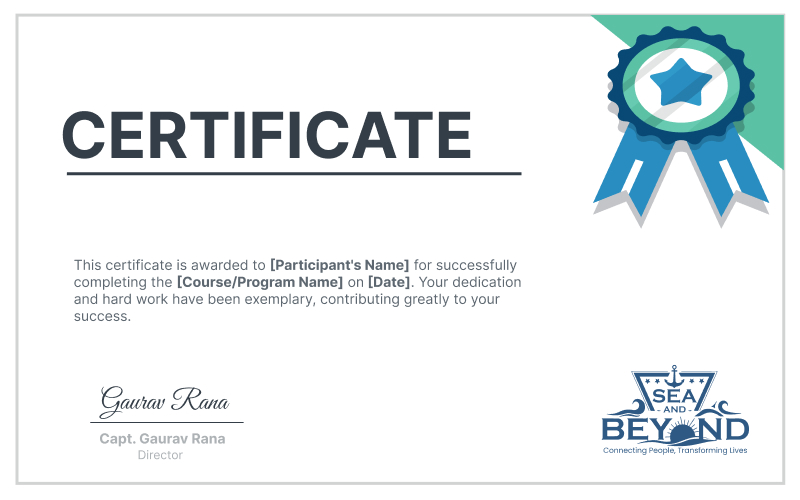
Successful completion of this course will earn you a certificate of completion from Sea and Beyond. This certificate will be emailed to you and you could also share and show it on LinkedIn Please click on the button below to purchase the certificate.
Similar Courses




















Contact Us