The Port Agency Tutorship Programme, conducted by Capt. Devashish Basu, is a structured, video-based learning programme designed to provide a clear and practical understanding of port agency operations and responsibilities in commercial shipping.
This port agency course is ideal for aspiring shipbrokers, seafarers planning a transition ashore, and maritime professionals seeking a strong operational understanding of port agency and shipping operations. Delivered through 10 comprehensive recorded video chapters, the programme simplifies complex port operations into practical, real-world explanations.
Course Structure and Syllabus Coverage
Ship Types and Regulatory Foundations
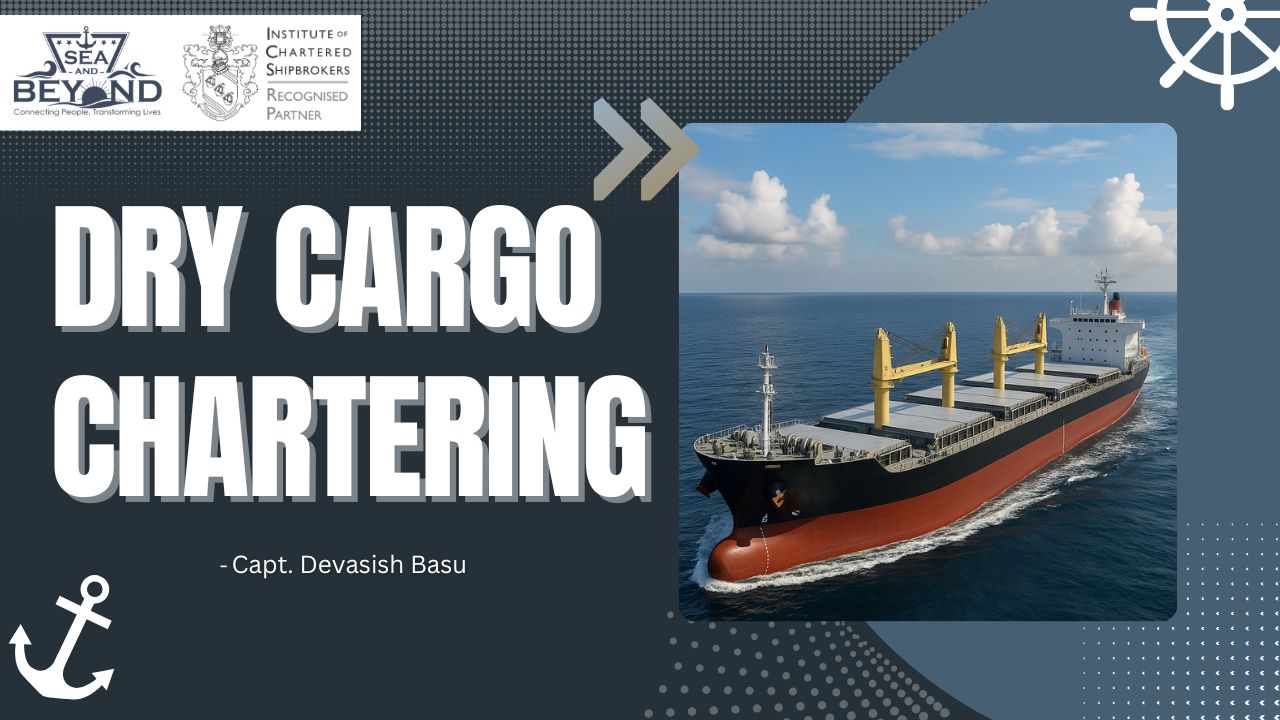
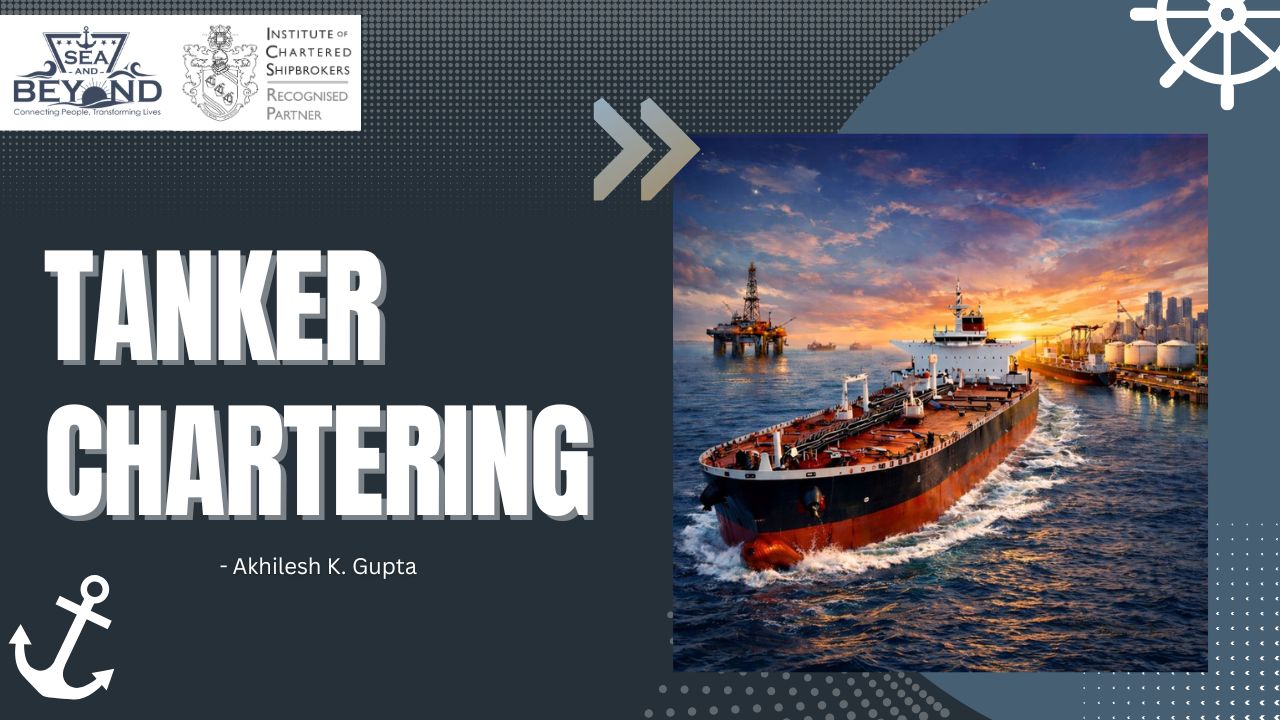
The course begins with an introduction to various ship types, including dry bulk carriers, tankers, container vessels, and multi-purpose ships. Participants develop a foundational understanding of ship design, onboard equipment, and cargo-handling systems—essential for effective port agency operations.
The programme also covers ship registration systems, classification societies, port state control, and key ship surveys, including pre-loading surveys, draft surveys, bunker surveys, and on-hire/off-hire inspections.
Core Port Agency Operations
In-depth modules focus on day-to-day port agency functions, explaining the agent’s role in coordinating with terminal operators, stevedores, pilots, tug operators, chandlers, and bunker suppliers.
Participants also learn how agents manage crew-related services, including immigration formalities, crew changes, medical assistance, welfare arrangements, and emergency support in port and shipping operations in port agency work.
Documentation and Port Formalities
The programme provides detailed instruction on port documentation and clearance procedures, covering customs, immigration, and port health requirements. It explains the preparation and handling of shipping documents, including Bills of Lading, cargo manifests, port clearance certificates, and cargo declarations, with a strong focus on accuracy and compliance.
Financial and Commercial Aspects of Port Agency
The final chapters address the financial responsibilities of a port agent, including the preparation of proforma and final disbursement accounts, fund management, freight collection, and recovery of outstanding payments.
Special emphasis is placed on the use of technology in port agency, including port community systems, digital reporting, and developments in paperless trade—key aspects of modern port operations.
Practical Learning Approach
The course is designed to build clarity in operational procedures, strengthen practical understanding, and enhance decision-making skills required in real-world port agency roles.
Who This Course is for
- Aspiring shipbrokers and port agents
- Seafarers transitioning to shore-based commercial roles
- Maritime professionals seeking operational port knowledge
- Individuals pursuing careers in shipping and port services
- Anyone looking for a port agency course or shipping agency training
Learning Outcomes
By the end of the programme, participants will have a clear operational and commercial understanding of port agency, confidence in handling port formalities and financial accounts, and the practical knowledge required to build a successful career in port services and Commercial shipping.

Sea and Beyond
At Sea and Beyond we strive for authenticity and honesty in our work. Our mission is to help “You take a well informed decision” and we try and support you through our various services like
- Mentoring
- Skill enhancement/Education
- Job Opportunities and
- Your branding (CV and LinkedIn preparation)
We have a team of writers who conduct thorough research to ensure the accuracy of the content and for the clarity in communication. We will be happy to support you wherever required
Rating:
Price:
₹ 14999
Language:
English
Length:
18:13:00
Intended for:
Reference:
Topics:
12 Sections . 36 lectures . 18h 13m total length
22 min
2.1 Chapter 1 | Introduction, Ship, Ship Size, GRT & NRT
Topics covered in this session:
- Introduction
- The Ship
- Ship Size
- GRT & NRT

36 min
2.2 Chapter 1 | Principal Dimensions, Ship Plans, Navigational Aids.
Topics covered in this session:
- Introduction
- Principal Dimensions and definitions.
- Ship Plans.
- Navigational Aids.
32 min
2.3 Chapter 1 | Ship Types, The Bulk Carrier, Internal Design
Topics covered in this session:
- Ship Types
- The Bulk Carrier
- Internal Design
- Bulk Carrier design problems.
17 min
2.4 Chapter 1 | Ship Types, Cement Carriers, Tween Deck Vessels
Topics covered in this session:
- Ship Types
- Cement Carriers
- Tween Deck Vessels
17 min
2.5 Chapter 1 | Ship Types, Types of Tankers, Oil tankers
Topics covered in this session:
- Ship Types
- Types of Tankers
- Oil tankers
25 min
2.6 Chapter 1 | Chemical & Parcel Tankers, Gas carriers, LPG/ LNG
Topics covered in this session:
- Ship Types
- Chemical and Parcel Tankers
- Gas carriers
- LPG/ LNG
25 min
2.7 Chapter 1 | Dry cargo ships, Container ships, Roll On/Roll Off
Topics covered in this session:
- Ship Types
- Specialised dry cargo ships.
- Container ships
- Roll On / Roll Off
- Barge Carriers
29 min
3.1 Chapter 2 | Registration and Classification, UNCLOS
Topics covered in this session:
- Registration and Classification
- Registration of vessels.
- UNCLOS
- Flag Of Convenience
34 min
3.2 Chapter 2 | Flag of Convenience, Tonnage tax
Topics covered in this session:
- Registration and Classification
- Attitude towards Flag of Convenience
- Offshore Flag / Second registers
- Tonnage tax
- Port state control
- Classification
32 min
4.1 Chapter 3 | Safety certificates, Load Line Certificates
Topics covered in this session:
- Safety Certificates and surveys
- Introduction
- Safety certificates
- Load Line Certificates
- Safety Construction Certificate
- Safety radio certificate
- IOPP
37 min
4.2 Chapter 3 | Safety Certificates and surveys, Cargo gear
Topics covered in this session:
- Safety Certificates and surveys
- Safety management Certificate
- Ship Security Certificate
- Cargo Gear Certificate
- De-ratting Certificate
- Safe Manning Certificate
- Grain Stability booklet
- Cargo Securing Manual
- Hazardous Cargo
- Maritime declaration of health
- Light Dues and similar certificates
- Other surveys and inspections
- Lloyd’s agents
- Other Inspection / Survey of ships
37 min
5.1 Chapter 4 | Charterparties, Loading rates, Laydays
Topics covered in this session:
- Charterparties Introduction
- Construction of voyage charterparties
- Loading place and cargo
- Loading rates
- Laydays and cancelling dates (Laycan)
- Cost of Loading and discharge
- Notices
- Opening and closing of Hatches
20 min
5.2 Chapter 4 | Charterparties, Bills of lading, Terminology
Topics covered in this session:
- Charterparties
- Bills of lading
- Terminology and abbreviations
41 min
5.3 Chapter 4 | Time Charter, Delivery / Redelivery, Port Agent
Topics covered in this session:
- Charterparties
- Time Charter
- Delivery / Redelivery
- The Agent’s influence upon the charter
- Port agent’s role in charterparty negotiations
- Port agent’s role in charterparty implementations
33 min
6.1 Chapter 5 | Time Counting, Loading / Discharging rates
Topics covered in this session:
- Time Counting
- Introduction
- The importance of time
- Loading / Discharging rates
- When time commences to count.
30 min
6.2 Chapter 5 | Notice Of Readiness, Demurrage & Despatch
Topics covered in this session:
- Time Counting
- Notice Of Readiness
- Demurrage and Despatch
- Time which does not count towards Laytime
38 min
6.3 Chapter 5 | Damages & Detentions, Despatch
Topics covered in this session:
- Time Counting
- Damages and Detentions
- Despatch
- Statement Of Facts and Time Sheet
47 min
7.1 Chapter 6 | Operations, Arrangement & supply of Services
Topics covered in this session:
- Operations
- Introduction
- The Arrangement and supply of Services on behalf of the principal.
22 min
7.2 Chapter 6 | Port Operations, The Ship, Bunkering
Topics covered in this session:
- Port Operations
- The Ship
- Bunkering
40 min
7.3 Chapter 6 | Operations, Port Operations, Ship’s Company
Topics covered in this session:
- Operations
- Port Operations – Declaration and Arrangement
- The Ship’s Company (Agent)
52 min
8.1 Chapter 7 | Manifest, Mate’s receipt, Standard shipping note
Cargo Documentation
- Introduction
- Manifest
- Mate’s receipt
- Standard shipping note
- Bill of Lading
- The bill of lading as a receipt
33 min
8.2 Chapter 7 | Bill Of lading, evidence, document of title
Cargo Documentation
- The Bill Of lading as evidence of contract
- The Bill Of lading as a document of title
- The discharging port agent and the bill of lading
37 min
8.3 Chapter 7 | Collecting Freight, Letters of indemnity
Cargo Documentation
- Collecting Freight
- Letters of indemnity
- Quality Certificates
- Other Cargo Documents
36 min
9.1 Chapter 8 | Trading Restraints, Navigational, Political
Geography Of Trade
- Introduction
- Trading Restraints
- Navigational
- Political
- Labour
50 min
9.2 Chapter 8 | Port, Places of Source, economic factors
Geography Of Trade
- Port
- Places of Source
- Regions of Consumptions
- Economic factors
- The Environmental issues
40 min
10.1 Chapter 9 | Port Agents and the Law, general practical points
Port Agents and the Law
- Introduction
- Some general practical points upon port agency and the law with particular reference to liability.
32 min
10.2 Chapter 9 | Practical duties & obligations, P&I Associations
Port Agents and the Law
- Practical duties and obligations
- Standard trading conditions
- Noting protest
- P&I Associations
44 min
10.3 Chapter 9 | General Average, Insurance cover
Port Agents and the Law
- General Average
- Insurance cover for the prudent port agent
31 min
11.1 Chapter 10 | Relation with the party who nominated the agent
Relationship with Principals
- Relation with the party who nominated the agent
34 min
11.2 Chapter 10 | Relationship with Principals
Relationship with Principals
- Relation with the party who nominated the agent
1 min
11.3 Chapter 10 | Disbursement account, Pro-forma disbursement
Relationship with Principals
- Disbursement accounting
- The Disbursement account
- The Pro-forma disbursement account
- Division of costs
- The final disbursement invoice
- Recoveries from delinquent principals
30 min
11.4 Chapter 10 | Cash Flow, Office Organisation
Topics covered in this session:
- Relationship with Principals
- Cash Flow
- Office Organisation
- Operational accounting
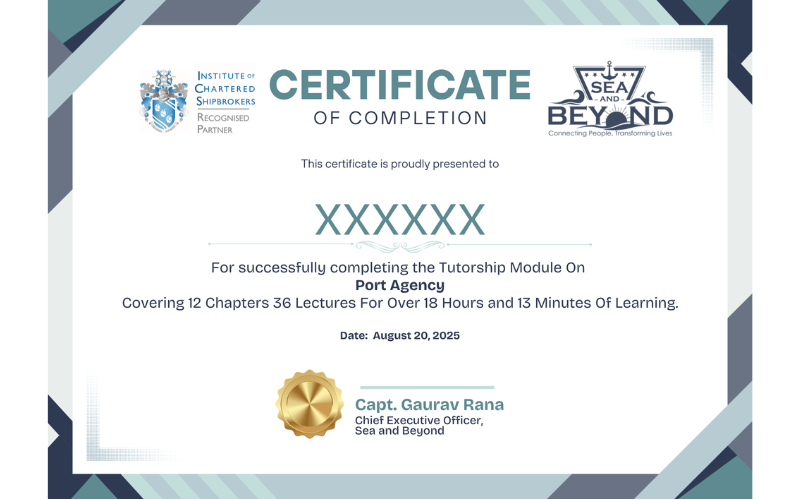
Successful completion of this course will earn you a certificate of completion from Sea and Beyond. This certificate will be emailed to you and you could also share and show it on LinkedIn Please click on the button below to purchase the certificate.