STCW vs Flag-State Documents
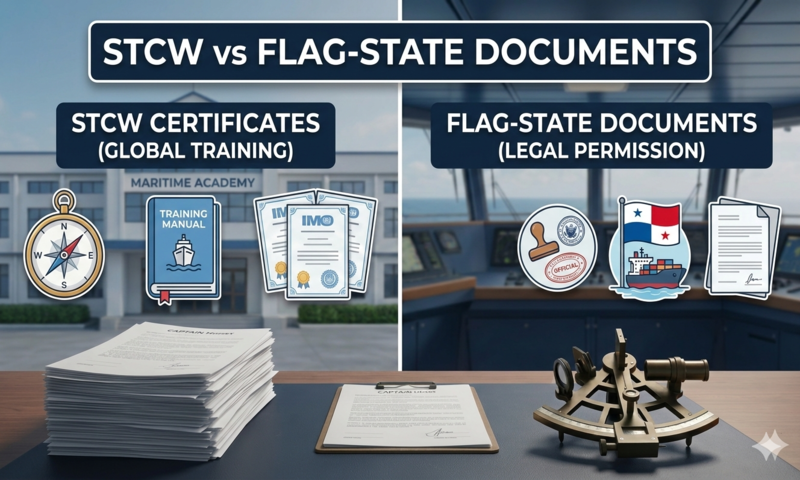
If you have spent any time in a maritime training center or on a ship’s bridge, you know that sailing is not just about navigation and engine maintenance. In today’s era, there is a mountain of paperwork involved. Among this paperwork, what may confuse newcomers and sailors alike is the difference between STCW and Flag state documents.
Since both are required to work on ships, lets dive down and understand these documents.
What are STCW Certificates?
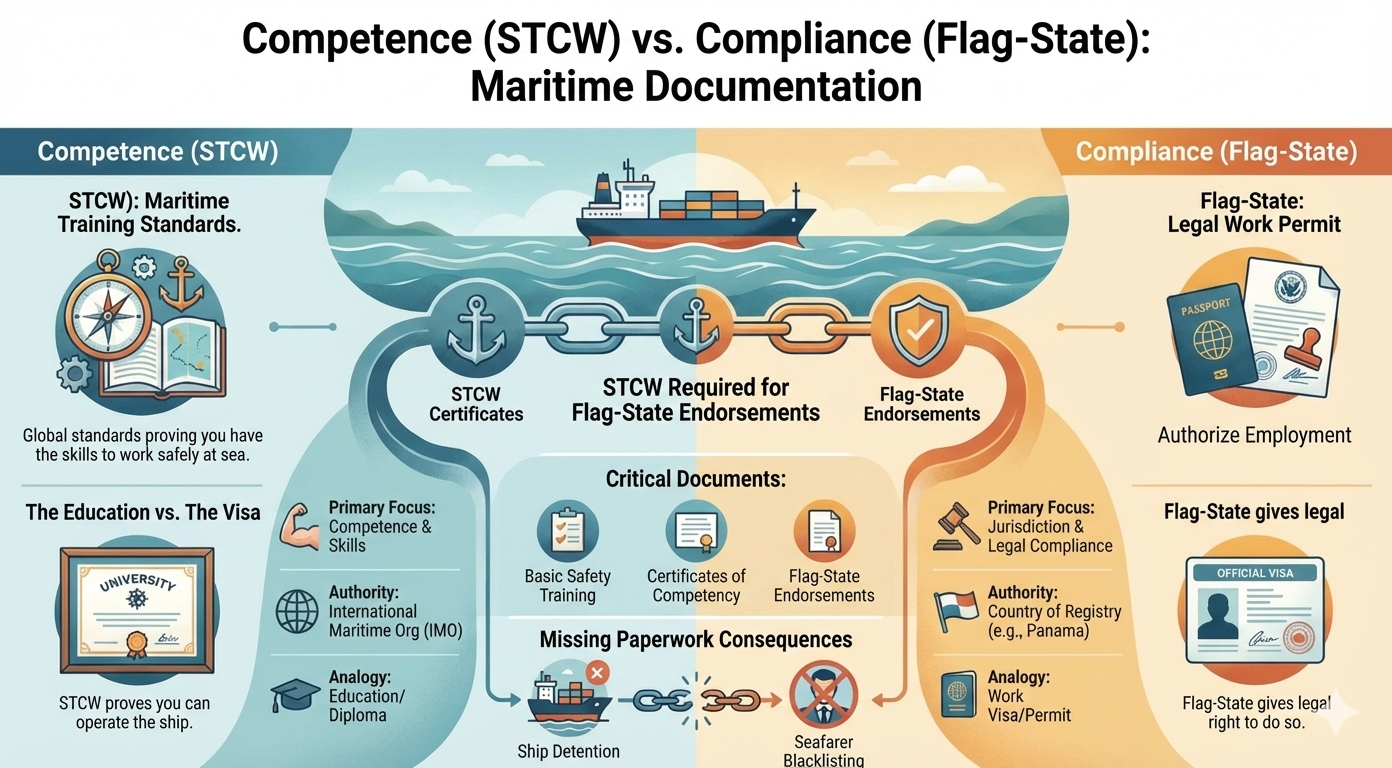
Think of STCW convention (Standards of Training, Certification, and Watchkeeping) as the "Maritime Language of training." Established by the International Maritime Organization (IMO), these certificates prove that you have the skills required to survive and work at sea, regardless of which country you come from. A seafarer who has had his/her training in India will have the same training as a seafarer from UK. This is the purpose of STCW convention.
Whether you are a Deck Cadet or a Chief Engineer, you must hold basic and advanced STCW certificates. These include:
- Basic Safety Training (BST): Firefighting, First Aid, and Sea Survival.
- Certificates of Competency (CoC): Your primary license to act as an officer.
- Certificates of Proficiency (CoP): Specialized training for tankers, high-voltage systems, or fast rescue boats, COP for Able seamen etc.
In summary, STCW convention basically provides a global training and certification standard for maritime authorities worldwide.
What are Flag-State Documents?
A Flag State is the country where a ship is registered (e.g., Panama, Liberia, or the Marshall Islands). Just because you have a license from your home country (like India) does not automatically mean you are allowed to work on a ship registered in another country.
Flag-State Documents are the official papers issued by that country to recognize you as a crew member on their vessels. The most common is the Flag-State Endorsement (FSE). It is a document that says, "We, the government of Panama, have checked this sailor's Indian CoC and we authorize them to work on our ships." Just like a lawyer who has obtained his credentials from India cannot practice law in US without the US authorities recognizing and endorsing the lawyer’s Indian credentials, a seafarer cannot work on a foreign flagged vessel without flag state endorsements and documents.
The Big Difference: Skill vs. Permission
The easiest way to understand the difference is through an analogy:
- STCW is your Education: It proves you know how to drive the car (the ship) and fix the engine.
- Flag-State Documents are your Visa/Work Permit: They give you the legal right to use those skills on a specific "territory" (the flagged ship).
While STCW is about competence, Flag-State documents are about jurisdiction and legal compliance.
Do You Need STCW to Get Flag Endorsements?
Absolutely. You cannot get a Flag-State Endorsement without a valid STCW Certificate of Competency (CoC) or Proficiency (CoP).
When you (or your company) apply for a Panama or Liberia endorsement, the first thing that Flag State does is verify your home-country STCW documents via the national database (like the DGS INDoS system in India). If your STCW certificates are expired, blurred, or unverified, the Flag State will reject your endorsement application immediately.
The High Cost of Missing Paperwork
What happens if you try to sail without these? The implications are severe and can be career-ending:
- Ship Detention: If a Port State Control (PSC) officer boards your ship and finds a crew member without the correct Flag Endorsement, they can "detain" the ship. This costs the owners loss in revenue.
- Insurance Nightmares: If an accident occurs and a crew member's documents are found to be invalid, the insurance company may refuse to pay the claim.
- Blacklisting: Seafarers caught with fraudulent or missing documents often face bans from specific flag states, making it nearly impossible to find future employment.
Conclusion
Although the FPD department usually takes ownership of keeping track of a seafarer’s documents and guiding them to undergo revalidation training and applying for various mandatory certificates, Knowing the key differences between various documents and keeping them up-to-date will always avoid last minute shocks and embarrassment.
This Blog is authored by Akshay Shrivastav

Details about the Author
Akshay Shrivastav holds a Bachelor's degree in Nautical Science from Indian Maritime University, complemented by pre-sea training at the International Maritime Institute. He currently serves as a Navigation and Operations Officer at Anglo-Eastern, managing ship navigation, cargo operations, and logistics with expertise in vessel oversight, tank cleaning coordination, and safety compliance during loading and unloading. At Anglo-Eastern, Akshay Shrivastav collaborates with teams to command vessels, streamline maritime operations, and assist senior officers in preparing for inspections and audits to uphold top standards. Driven by safety and precision, he seeks to apply a structured, detail-focused mindset to drive organizational success, while promoting teamwork and operational efficiency.



Sea and Beyond
At Sea and Beyond we strive for authenticity and honesty in our work. Our mission is to help “You take a well informed decision” and we try and support you through our various services like
- Mentoring
- Skill enhancement/Education
- Job Opportunities and
- Your branding (CV and LinkedIn preparation)
We have a team of writers who conduct thorough research to ensure the accuracy of the content and for the clarity in communication. We will be happy to support you wherever required
Leave a comment
View more
Give your career a boost with S&B professional services.
CV Prep/Evaluation Prep Service
SeaCommerce
Shop maritime books & essentials
DG Medical Examiners
Find approved doctors near you
Tools & Calculators
Free maritime tools for seafarers
More Jobs
Ship management
Delhi
Technical / Purchase Execu..
Ship management
Mumbai
Finance Operations / Accou..
Ship management
West Bengal
Physical & Chemical Testin..
Interview Prep/Mentoring
Find your polestar with the host of experts available on our platform
Know moreSimilar Blogs

What is Merchant Navy? Meaning, Work and Career Guide (2026)
Sea and Beyond

Hierarchy in Merchant navy
Sea and Beyond
Types of Vessels in the Merchant Navy
Sea and Beyond

Navigating the Risks: How AI Poses Threats to the Maritime Industry
Capt.Tanvir Singh

Crew Management
Sea and Beyond
IMO Council elections 2023
Sea and Beyond
Maritime Law
Sea and Beyond
On the RADAR: Loitering Munitions and Surge in Attacks on Merchant Vessels.
Gourav Kullu
The Rising Tide: Carriage of Liquified Carbon Dioxide.
Gourav Kullu

Documents handled by ship agents
Capt.Amresh Kumar Jha

How to Negotiate Salary with HR
Rajan Narayan

Demystifying Predictive maintenance.
Gourav Kullu

Predictive Index (PI) Assessment in the Hiring Process
Sea and Beyond
Decoding USCG inspections through data.
Gourav Kullu

Conquer Your Chief Mate Phase 1 Assessment: A Step-by-Step Guide
Shatrunjay Sahai
Maritime India Vision 2030
Pinaki Dasgupta

Human Element vs. Human Factors
Capt. Abhijith Balakrishnan

From Obscurity to Opportunity: Unveiling Vadhavan Port, India's Next Maritime Powerhouse.
Gourav Kullu

The Strategic Investor at Sea
Vishal Ahlawat
Financial Planning
Money Guard

GPS Rollover: A Potential Threat to Navigation
Shatrunjay Sahai

Join Merchant Navy And See The World
Tanmay Desai
Understanding the Legal Implications of MV Dali Ship Allision Case - Who pays for the loss?
Ms. Aufa Karnalkar

Ammonia powered ships: The future?
Shatrunjay Sahai
Decoding Onboarding: 7 Valuable Insights from Maritime Industry Professionals
Shankar Mohan
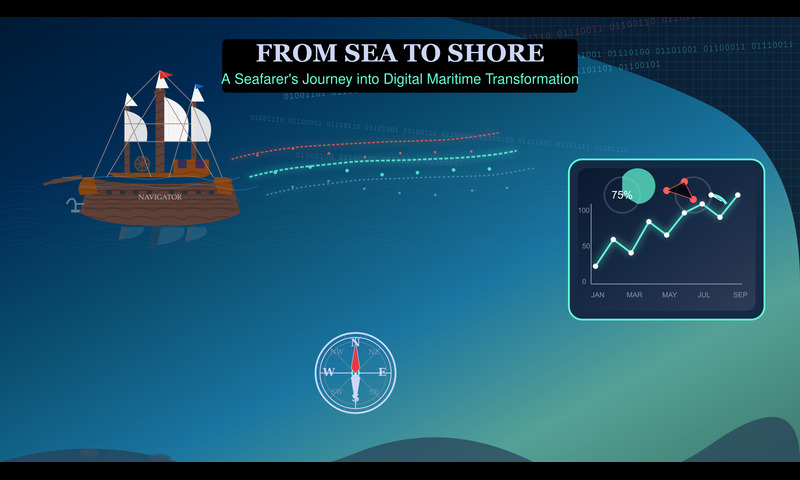
From " Chief Marine Engineer to Chief Data Officer": A Transformation story
Venkat Krishna Soundarraja
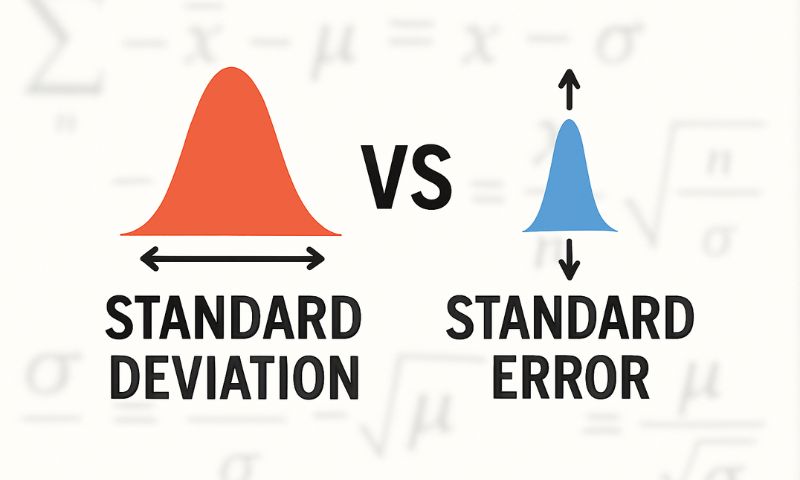
Standard Deviation vs Standard Error: Why It Matters!
Venkat Krishna Soundarraja
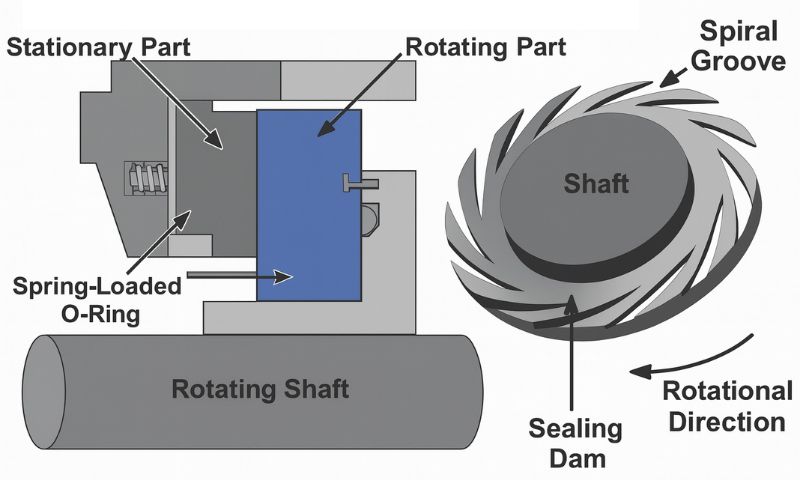
Dry Gas Sealing Systems
Venkat Krishna Soundarraja

Shore Leave: The Vanishing Lifeline in Global Shipping
Capt. Shawn Sequeira

PERSONAL FINANCE - Navigating your way to Financial Freedom
Vinay Naidu
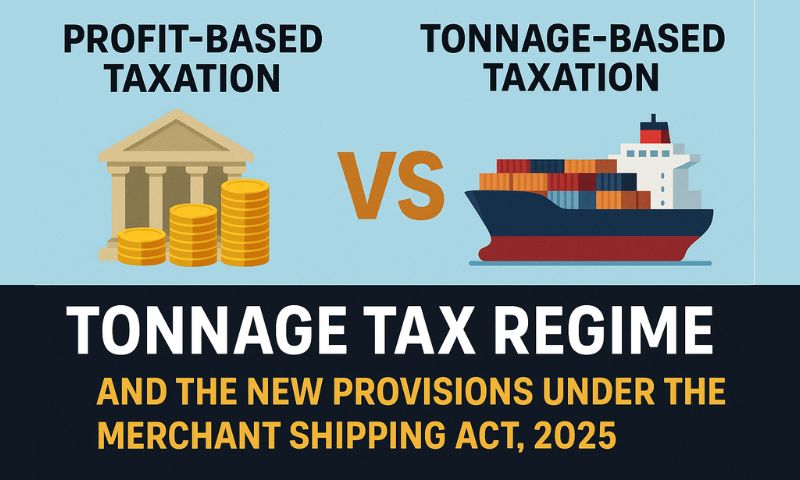
⚓ Tonnage Tax Regime and the New Provisions under the Merchant Shipping Act, 2025
Capt. M. M Saggi
IMO Net-Zero Fund: Paving the Way to Decarbonized Shipping
Capt. M. M Saggi

Chartering & Finance - From Routes to Returns
Vinay Naidu
From the Ganges to the Globe: My Journey Beyond the Sea
Capt. Vinod Dubey
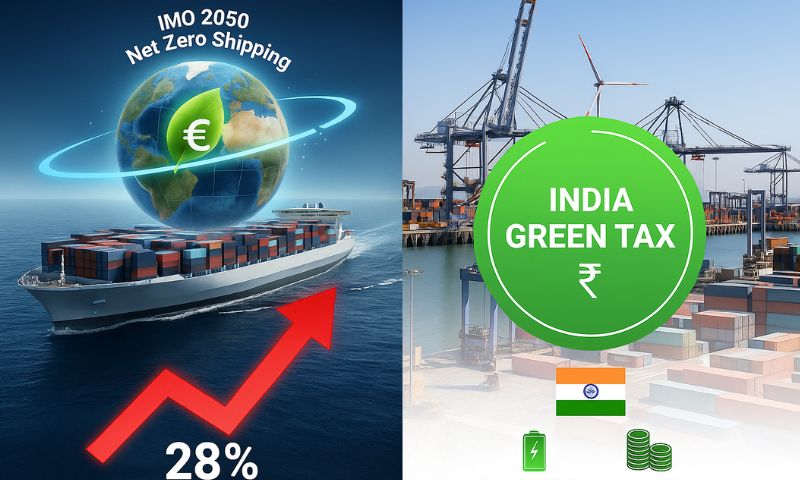
IMO Green Tax for Net Zero Shipping by 2050: The Best Option for India
Capt. M. M Saggi
From Pink City to Blue Oceans: My Maritime Journey
Ruchi Tripathi
Casualty & Incident Investigation: Conflicting Interests, Shared Objectives — Finding the Balanced Way Forward
Capt. M. M Saggi
Foreign Shipowners Flagging into India: Opportunity, Pride — and Policy Questions
Sea and Beyond
MSC.581(110): Enclosed Space Entry — Key Pros, Cons, and Industry Impact
Sea and Beyond
What is a Continuous Discharge Certificate (CDC) or Seaman’s book?
Sea and Beyond
How to apply for a Continuous Discharge Certificate (CDC)?
Sea and Beyond

AI Hallucinations in Maritime: Why Chatbots Confidently give Answers Wrong (And How to Prevent It)
Capt. Vineet Shukla
Step by step guide on CDC renewal
Sea and Beyond
Ahoy!! Sailor
Capt. Eldren Goes
Land Acquisition for Large Port Projects in India
Sea and Beyond

Beyond the Hype: Pitfalls in AI Product Development
Venkat Krishna Soundarraja
Difference between Indos, SID, and CDC
Sea and Beyond
CTC vs Take-Home Salary in India: A Guide for Seafarers Moving to Shore Jobs
Sea and Beyond
Green shipping: The future of sustainable maritime industry
Sea and Beyond
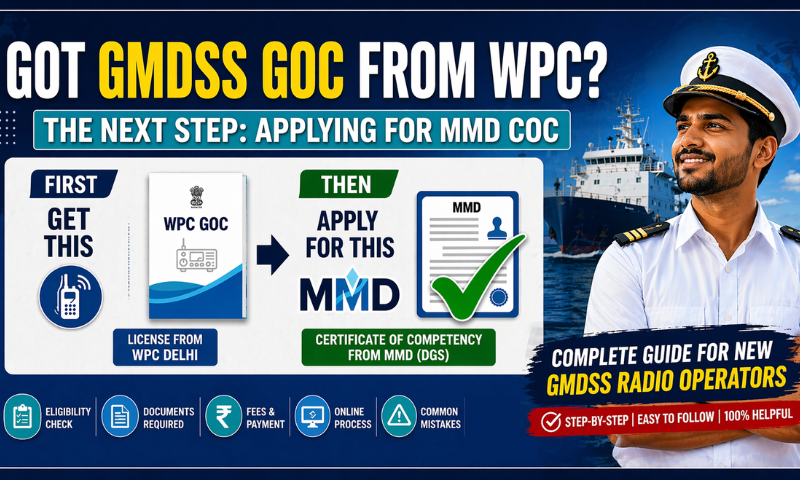
How to Apply for GMDSS GOC COC in India: A Complete Step-by-Step Guide for New Applicants
Akshay Shrivastava
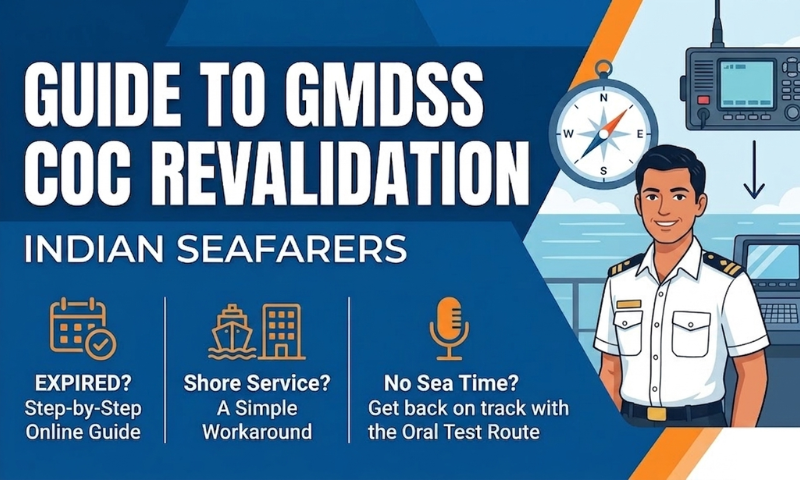
GMDSS GOC COC Revalidation: Everything Indian Seafarers Need to Know
Akshay Shrivastava
A New Route to Second Mate: What Deck Ratings Need to Know About the DGS's Latest Circular
Akshay Shrivastava
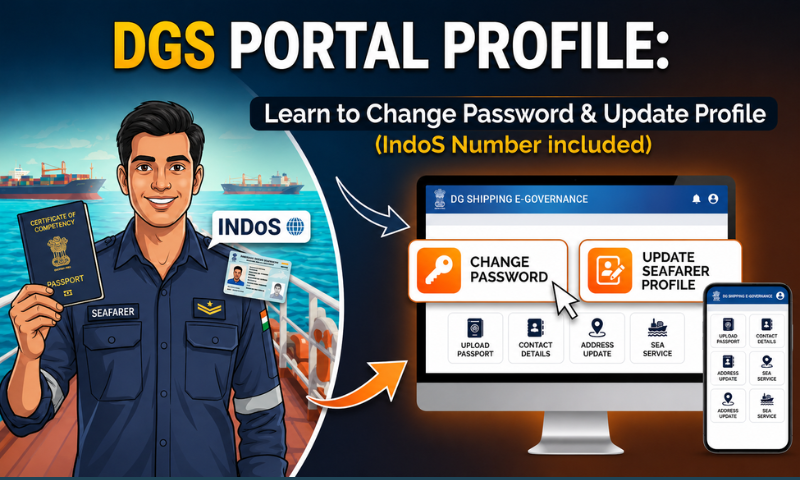
How to Keep Your Seafarer Profile Up to Date on the DGS Portal — A Complete Step-by-Step Guide
Akshay Shrivastava
Expectations from AI in the Maritime Industry: Aspirations vs Reality! What Do We Really Want AI to Do for Us?
Venkat Krishna Soundarraja
How to Calculate Professional Work Experience as a Mariner
Akshay Shrivastava
Abandoned Seafarers: Challenges, Global Practices and a Self-Regulatory Way Forward for India
Capt. M. M Saggi
Extreme War Risk Insurance in Shipping: What Owners, Charterers, Shippers, and Consignees Need to Know
Capt. M. M Saggi
Psychological Safety in Maritime: Building High-Performance Teams Through Conscientious Leadership
Capt. M. Sairaj